Smart Factory Integration & Retrofit Solutions
0 standard without the disruption and cost of replacing entire production lines.
Engineered precision for Smart Factory Integration & Retrofit Solutions.
Kerone’s Smart Factory Integration & Retrofit Solutions help existing manufacturing facilities upgrade to the industry 4.0 standard without the disruption and cost of replacing entire production lines. By integrating advanced sensors, industrial IoT (IIoT) platforms, machine connectivity, and intelligent control systems into existing equipment and processes, Kerone transforms legacy factories into data-driven, highly efficient smart manufacturing environments. Whether it’s retrofitting an ageing dryer with predictive maintenance sensors, integrating a disparate fleet of machines into a unified SCADA system, or deploying an AI-powered quality inspection system on an existing production line, Kerone delivers smart factory upgrades that generate rapid, measurable returns.
Our advanced AI, ML, and IoT technologies, this solution delivers smarter automation, real-time insights, and predictive intelligence to enhance efficiency and drive future-ready growth.
Continuous tracking of process parameters with instant adjustments.
Intelligent fault detection to prevent failures before they occur.
Dynamic tuning of operations for maximum output and efficiency.
The thermodynamic architecture of our Smart Factory Integration & Retrofit Solutions incorporates advanced thermal modeling and computational fluid dynamics (CFD) to ensure optimal heat and mass transfer across the entire processing zone. By precisely controlling thermal gradients, air velocity profiles, and direct energy delivery mechanisms, the system achieves uniform treatment while preventing localized overheating, product degradation, or thermal stress. This balance of intensive heat transfer and controlled retention time ensures maximum operational throughput with minimal specific energy consumption.
Built with heavy-duty structural engineering and sanitary metallurgy, each unit is manufactured to withstand continuous 24/7 industrial operating conditions. Contact surfaces are finished in high-grade stainless steel (SS 304, SS 316L, or corrosion-resistant alloys) with sanitary mirror-polish options, CIP/SIP washdown provisions, and hermetic chamber sealing. This guarantees full compliance with stringent international hygiene, CE machinery directives, and cGMP standards across food, pharmaceutical, specialty chemical, and heavy manufacturing applications.
Proprietary control algorithms ensure strict process repeatability, while built-in safety interlocks and electromagnetic shielding comply with international CE and OSHA standards. Full process development support — including material loss tangent testing, moisture sorption isotherms, and pilot trials at our Ambernath R&D facility — ensures the selected technology matches your exact industrial throughput goals.
Product & Systems Gallery
Explore authentic high-resolution photographs of industrial machinery, pilot trial rigs, and continuous turnkey processing installations engineered by Kerone Engineering Solutions for Smart Factory Integration & Retrofit Solutions. Each system is fabricated at our ISO 9001:2015 certified manufacturing facilities with precision laser cutting, robotic welding, and stringent Factory Acceptance Testing (FAT).

Smart Factory Integration & Retrofit Solutions
Click to view high-res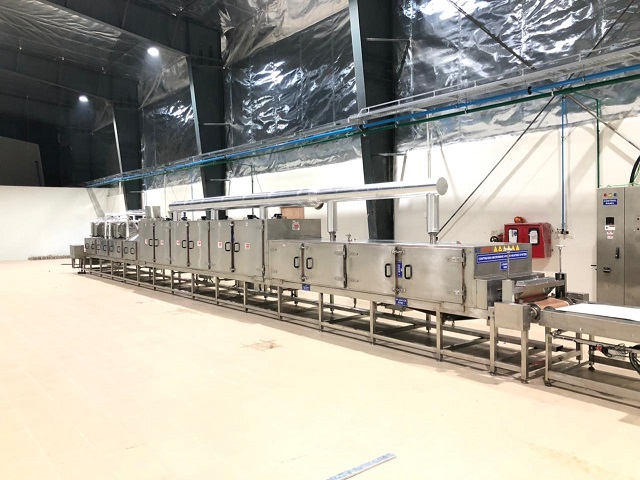
Smart Factory Integration & Retrofit Solutions
Click to view high-res
Smart Factory Integration & Retrofit Solutions
Click to view high-res
Smart Factory Integration & Retrofit Solutions
Click to view high-res
Smart Factory Integration & Retrofit Solutions
Click to view high-res
Smart Factory Integration & Retrofit Solutions
Click to view high-res50+ Years of Thermal Engineering Leadership.
Since 1976, Kerone Engineering Solutions has delivered over 5,000 custom-engineered thermal and process installations across 50+ countries. In technical collaboration with premier global institutions like CSIR-CEERI and University of Nottingham research partnerships, we design and manufacture high-efficiency machinery that minimizes production downtime and cuts operating expenses.
Unlike standard off-the-shelf equipment suppliers, Kerone operates a complete pilot-scale testing facility at our KRDC Ambernath center. We validate your exact raw material properties — determining moisture sorption isotherms, specific heat capacity, and dielectric behavior — before finalizing equipment sizing, ensuring zero risk during industrial scale-up.
Engineering precision, built into every system.
Equipment From All Manufacturers
Non-intrusive IIoT sensor installation compatible with equipment from all manufacturers
Real-time OEE Monitoring
Real-time OEE monitoring with automated root cause analysis and improvement recommendations
Predictive Maintenance
Predictive maintenance algorithms trained on equipment-specific historical data
Seamless Protocol Conversion
Seamless protocol conversion supporting OPC-UA, MQTT, Modbus, PROFIBUS, and Ethernet/IP
Edge Computing Nodes
Edge computing nodes for low-latency local analytics independent of cloud connectivity
Digital Twin Modeling
Digital twin modeling for process optimization and operator training simulations
Phased Implementation
Phased implementation methodology that minimizes production downtime during integration
Management Teams
Unified dashboard with KPI visualization, alerts, and mobile access for management teams
Powered by AI, Machine Learning & Smart IoT Integration
Modern industrial processing requires unprecedented thermal precision, energy efficiency, and operational agility. Kerone equips each system with high-speed industrial edge computing controllers, multi-spectral non-contact infrared pyrometry, and proprietary closed-loop machine learning algorithms that continuously analyze process parameters in real time.
The intelligent automation stack monitors dynamic changes in incoming material load, bed thickness, moisture content, and environmental factors. In response, our algorithms dynamically adjust heater power arrays, generator frequency, conveyor drive velocities, and exhaust dampers within milliseconds — entirely eliminating product burn, under-processing, or thermal hotspotting.
Seamlessly integrated with factory-wide SCADA and enterprise ERP architectures via native MQTT, OPC-UA, and Modbus TCP protocols, our systems deliver complete digital recipe control, remote diagnostics, predictive maintenance alerting, and tamper-evident batch logs compliant with global FDA 21 CFR Part 11 and cGMP standards.
Adaptive Heat Modulation
Neural algorithms detect material thermal variations in real time (<50ms response) and tune generator frequency and power arrays automatically.
IoT Cloud Telemetry
Continuous bidirectional telemetry stream via MQTT/OPC-UA protocols directly to centralized plant SCADA, MES, or mobile engineer dashboards.
Predictive Maintenance
Monitors magnetron cathode current, vibration frequency signatures, and differential filter pressure to schedule AMC maintenance before failures occur.
Quality & Batch Traceability
Automated digital recipe execution, multi-stage temperature ramp/soak curves, and cryptographically signed electronic batch logs compliant with 21 CFR Part 11.
Engineered for High-Value Industrial Sectors
Tailored thermal and process configurations across continuous manufacturing lines.
Retrofitting legacy industrial drye...
Retrofitting legacy industrial dryers with predictive maintenance and remote monitoring systems
Integrating disparate CNC machines ...
Integrating disparate CNC machines and processing equipment into a unified SCADA platform
Deploying AI
powered visual quality inspection on existing packaging and finishing lines
Implementing real
time energy monitoring and optimization across multi: equipment production floors
Digital twin development for proces...
Digital twin development for process optimization in chemical and pharmaceutical plants
Automated batch record and complian...
Automated batch record and compliance report generation for regulated manufacturing environments
Configured to Your Process Window
Technical parameter envelopes across industrial manufacturing and engineering architectures.
Frequently Asked Questions
Engineering answers regarding equipment sizing, integration, and process performance.
Yes, Kerone specializes in non-intrusive retrofits that add smart sensing, connectivity, and analytics capabilities to existing equipment without requiring complete replacement.
Kerone supports OPC-UA, MQTT, Modbus, PROFIBUS, DeviceNet, Ethernet/IP, and RS232/485 serial protocols, enabling connectivity to virtually any industrial equipment brand.
Kerone uses a phased implementation approach, installing sensors and connectivity systems during planned maintenance windows and staging software integration to avoid interrupting production.
OEE (Overall Equipment Effectiveness) measures availability, performance, and quality. Kerone's monitoring systems identify the root causes of OEE losses in real time, enabling targeted corrective actions.
Yes, Kerone's predictive maintenance systems use vibration analysis, thermal imaging, and machine learning algorithms to predict equipment failures before they occur, reducing unplanned downtime.
A digital twin is a virtual replica of a physical plant used for simulation, optimization, and training. Kerone develops digital twins using real process data and physics-based modelling tools.
Yes, Kerone's platforms include secure remote access via web browsers and mobile apps, allowing management and engineering teams to monitor and control production from anywhere.
Kerone's clients typically achieve ROI within 12 to 24 months through energy savings, reduced downtime, lower maintenance costs, and improved production yield and quality.
Connecting legacy industrial equipment to IIoT platforms introduces network attack surface that didn't exist when machines operated in isolation, so Kerone implements network segmentation that keeps the operational technology network separate from the corporate IT network, encrypted data transmission between sensors and gateways, and authentication requirements for any remote access to plant systems. Legacy equipment often uses older communication protocols like Modbus that lack native security features, which means protocol conversion gateways need to handle authentication and encryption on behalf of equipment that cannot natively support it. Regular security patching of edge computing nodes and gateway devices is necessary since these become new endpoints requiring the same security discipline as any other networked device. Manufacturers should treat smart factory retrofits as both an automation project and a cybersecurity project from the outset, not as automation alone.
A common mistake is retrofitting sensors and connectivity onto equipment without first defining what specific decisions the resulting data will support, leading to dashboards full of data that nobody acts on. Companies sometimes attempt to retrofit their entire facility simultaneously rather than starting with a pilot area to validate the approach and demonstrate ROI before scaling, which increases both risk and disruption. Underestimating the data infrastructure and IT support needed to maintain the new systems after installation is another frequent issue, since IIoT platforms require ongoing administration that legacy equipment never needed. Failing to involve operators and maintenance technicians in defining what information would actually help them in their daily work often results in systems that are technically sound but operationally underused because the workforce wasn't engaged in the design process.
A common misconception is that older equipment is too outdated to benefit from smart sensors, when in practice non-intrusive retrofits like vibration and temperature sensors can be added to almost any rotating or thermal equipment regardless of its age or original control system. Another misconception is that retrofitting requires replacing the existing PLC or control system, when most retrofit projects add a parallel sensing and data layer that observes equipment behavior without touching the original control logic at all. Some manufacturers assume retrofit data quality will be inferior to a purpose-built new machine's native sensors, when properly selected and installed aftermarket sensors often provide comparable or better data resolution than basic factory-installed instrumentation on older equipment. Clarifying these points typically shifts the conversation from whether retrofitting is feasible to which specific equipment offers the best return on retrofit investment.
Operators need training on interpreting dashboard alerts and understanding what specific sensor readings indicate about equipment condition, since raw data without context doesn't translate into useful action on its own. Maintenance technicians need training on responding to predictive maintenance alerts, including how to validate a predicted failure before committing resources to an unscheduled repair. IT and engineering staff need training on maintaining the underlying data infrastructure, including gateway devices, network configuration, and software updates that keep the system running reliably. Kerone typically includes hands-on training during commissioning along with documentation, but the most successful retrofit projects also designate an internal champion who continues reinforcing proper system use after the initial training period ends, since technology adoption tends to fade without ongoing internal reinforcement.
Yes, Kerone designs retrofit architectures with scalability in mind, typically starting with a pilot deployment on critical equipment and expanding sensor coverage, analytics capability, or additional machines once the initial deployment demonstrates value. Edge computing nodes and gateway infrastructure are usually sized with spare capacity for additional sensor channels, and cloud-based analytics platforms can typically onboard additional equipment without requiring a fundamental architecture change. This phased approach lets manufacturers validate ROI on a smaller scale before committing to a facility-wide rollout, and it spreads capital expenditure over a longer period rather than requiring a large upfront investment. The main planning consideration is ensuring the initial pilot's network and data architecture choices remain compatible with the eventual full-scale vision, rather than choosing a quick pilot solution that requires complete replacement when scaling up.
AI-powered visual inspection systems retrofitted onto existing packaging, finishing, or assembly lines typically catch defect types that manual visual inspection misses due to inspector fatigue or inconsistent attention, including subtle surface defects, dimensional variations, and assembly errors that occur intermittently rather than in obvious patterns. Defect detection rates commonly improve from inspection systems that operate consistently at every unit rather than sampling-based manual inspection, which only checks a percentage of production. Beyond catching defects, the data generated identifies which process step or shift correlates with higher defect rates, enabling root-cause correction rather than just downstream rejection. Implementation requires training the vision system on examples of both acceptable and defective product specific to that production line, since generic vision models rarely perform well without this calibration to the actual product and defect types present.
Process industries with substantial existing capital equipment that remains mechanically sound, such as chemical processing, pharmaceutical manufacturing, and food production with multi-decade equipment lifecycles, are particularly well suited for retrofitting since replacing functioning process equipment purely for connectivity rarely makes economic sense. Discrete manufacturing with shorter equipment replacement cycles may find it more economical to specify smart capability directly when equipment is naturally due for replacement rather than retrofitting equipment that will be replaced again soon anyway. Facilities expanding into new product lines or new geographic locations often default to greenfield builds with smart capability designed in from day one. The decision ultimately depends on the remaining useful life of existing equipment relative to the cost of retrofitting it versus waiting for natural replacement cycles to introduce smart capability.
Let’s Engineer the Right Process.
From application trials to full-scale production systems, our engineering team works with you to develop the right thermal processing solution for your material, throughput, and production requirements.