Drum Dryers
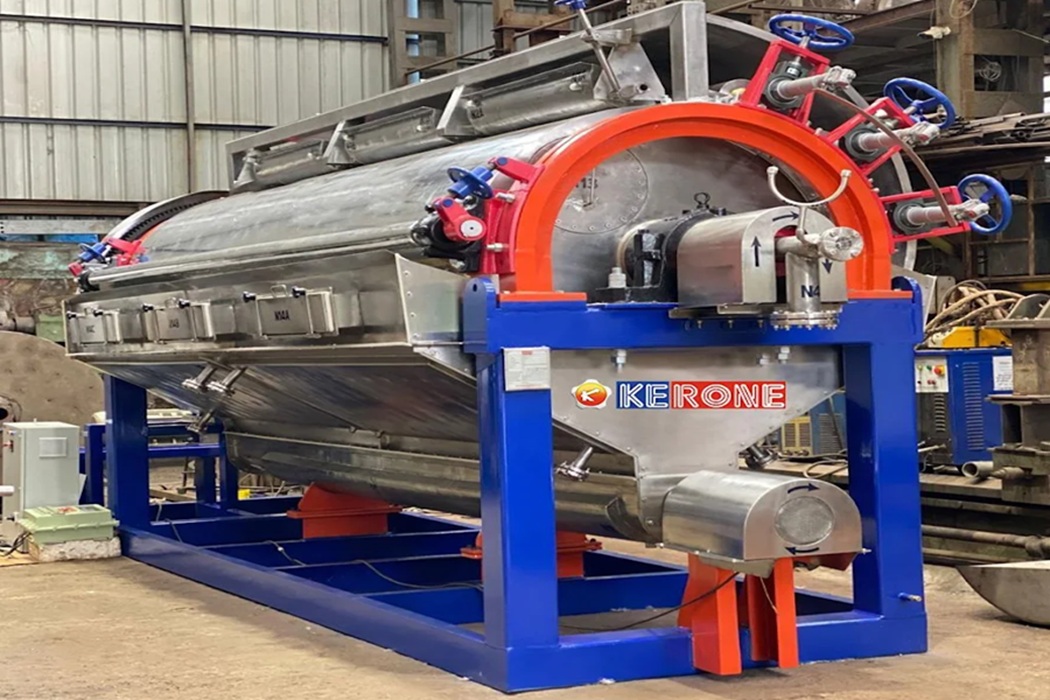
Kerone’s drum dryer are best suitable of drying of the viscous materials, concentrated solutions, slurries or pastes by on rotating steam-heated drums. Drum dryers are also called as roller dryer due to it constructions.
Engineered precision for Drum Dryers.
Kerone’s drum dryer are best suitable of drying of the viscous materials, concentrated solutions, slurries or pastes by on rotating steam-heated drums. Drum dryers are also called as roller dryer due to it constructions. The material to be dried usually slurry or viscous in nature, are spread mechanically on the two counter rotating drums as thin sheet, this sheet is then rapidly dried conductively by high heat that is generated within the drum.
Depending upon the material to be dried the, we at Kerone produce various type of drum dryers such as for very wet or past containing high moisture level high temperature is achieved within the drum, however on other side if the materials in highly heat sensitive low temperature hot air is transferred within the drums.
At Kerone, in last 50 years we have helped multiple industrial verticals with our range of drum dryers, best part of our deliverables are very pieces of dryers are carefully designed and customised post critically examining the material, process and desired output quality and achieve high degree efficiency.
The drum dryer is very flexible in nature, its operation depends on the pressure of steam within the drum, speed of drum rotation, width of applicator and the ratio of drum speed rotations. All these parameters can by control/ regulated independently without any dependency on each other. Typical value of the drum dryer components ranges from steam pressure in drum from 29 to 115 psi, rotation speed can vary from 2 to 30 rpm, thin sheet applicator width can be designed from 0.05 to 0.5 mm, and the ratio of drum rotation speed is from 1 to 5.
Note:Above mentioned parameters are ideal for most of common application, however at Kerone, we manufacture highly customised drum dryers that can handle the critical and unconventional application as well.
Drum dryers are basically classified in two stages first based on the operating pressure i.e. atmospheric type and vacuum type within these two classification the drum dryers are further classified as Single Drum Dryers, Double Drum Dryer and Twin Drum Dryers.
The thermodynamic architecture of our Drum Dryers incorporates advanced thermal modeling and computational fluid dynamics (CFD) to ensure optimal heat and mass transfer across the entire processing zone. By precisely controlling thermal gradients, air velocity profiles, and direct energy delivery mechanisms, the system achieves uniform treatment while preventing localized overheating, product degradation, or thermal stress. This balance of intensive heat transfer and controlled retention time ensures maximum operational throughput with minimal specific energy consumption.
Built with heavy-duty structural engineering and sanitary metallurgy, each unit is manufactured to withstand continuous 24/7 industrial operating conditions. Contact surfaces are finished in high-grade stainless steel (SS 304, SS 316L, or corrosion-resistant alloys) with sanitary mirror-polish options, CIP/SIP washdown provisions, and hermetic chamber sealing. This guarantees full compliance with stringent international hygiene, CE machinery directives, and cGMP standards across food, pharmaceutical, specialty chemical, and heavy manufacturing applications.
Proprietary control algorithms ensure strict process repeatability, while built-in safety interlocks and electromagnetic shielding comply with international CE and OSHA standards. Full process development support — including material loss tangent testing, moisture sorption isotherms, and pilot trials at our Ambernath R&D facility — ensures the selected technology matches your exact industrial throughput goals.
Product & Systems Gallery
Explore authentic high-resolution photographs of industrial machinery, pilot trial rigs, and continuous turnkey processing installations engineered by Kerone Engineering Solutions for Drum Dryers. Each system is fabricated at our ISO 9001:2015 certified manufacturing facilities with precision laser cutting, robotic welding, and stringent Factory Acceptance Testing (FAT).
Drum Dryers
Click to view high-res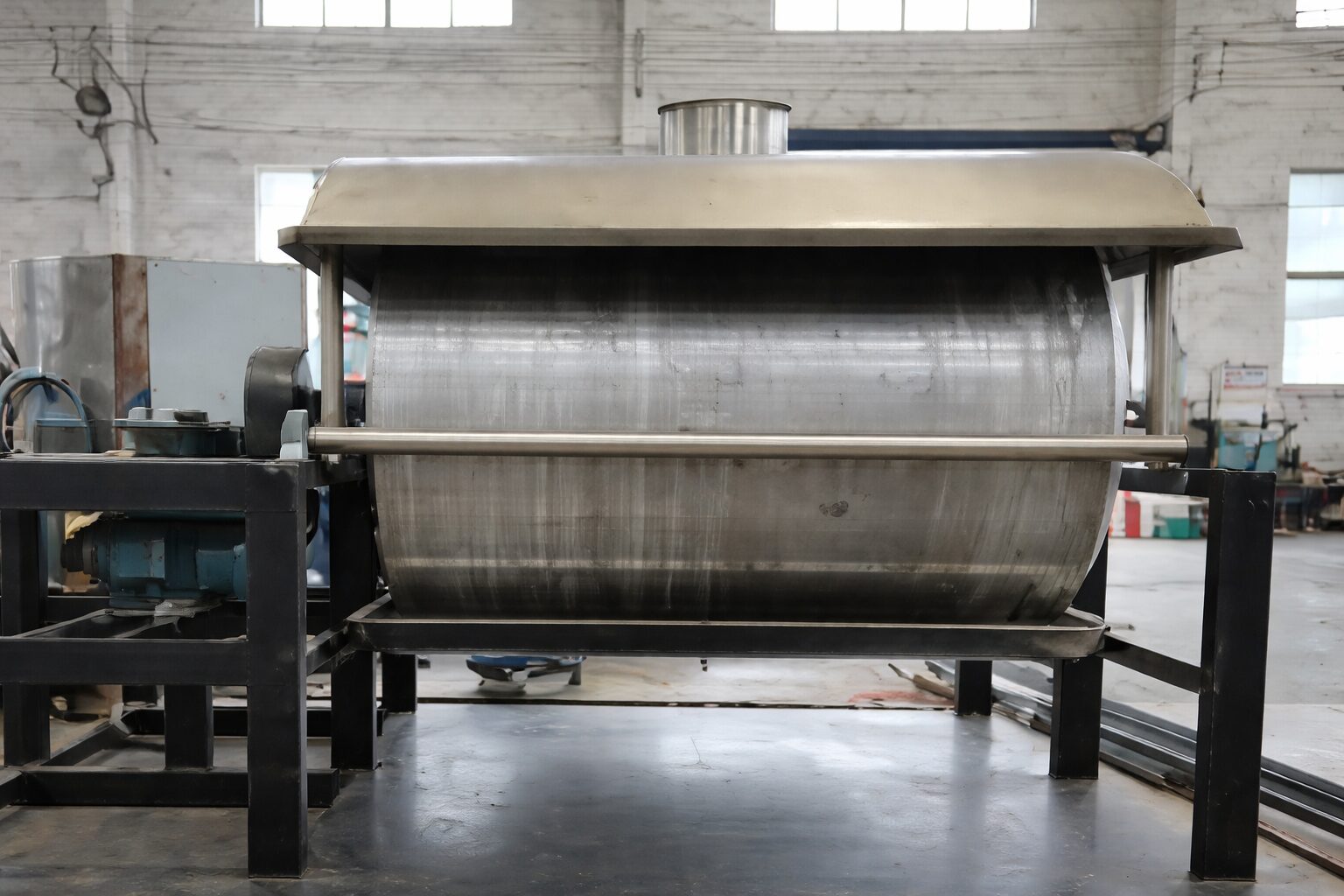
Drum Dryers
Click to view high-res
Drum Dryers
Click to view high-res
Drum Dryers
Click to view high-res
Drum Dryers
Click to view high-res
Drum Dryers
Click to view high-res
Drum Dryers
Click to view high-res
Drum Dryers
Click to view high-res
Drum Dryers
Click to view high-res
Drum Dryers
Click to view high-res
Drum Dryers
Click to view high-res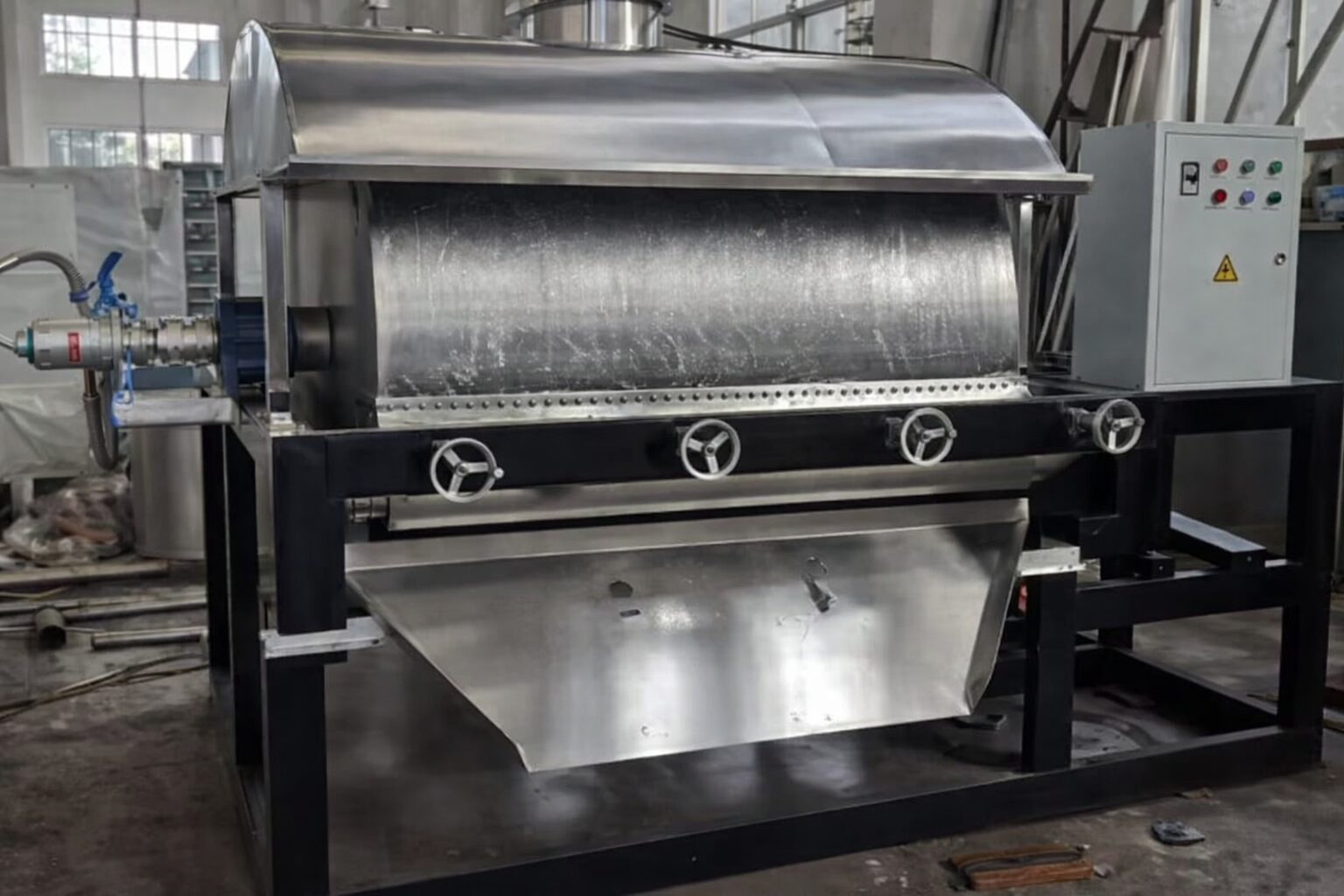
Drum Dryers
Click to view high-res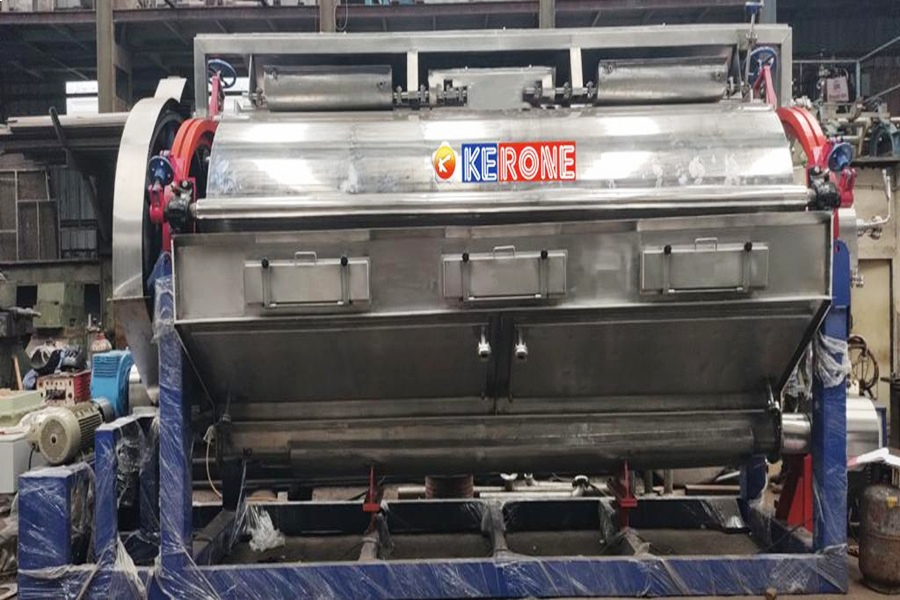
Drum Dryers
Click to view high-res50+ Years of Thermal Engineering Leadership.
Since 1976, Kerone Engineering Solutions has delivered over 5,000 custom-engineered thermal and process installations across 50+ countries. In technical collaboration with premier global institutions like CSIR-CEERI and University of Nottingham research partnerships, we design and manufacture high-efficiency machinery that minimizes production downtime and cuts operating expenses.
Unlike standard off-the-shelf equipment suppliers, Kerone operates a complete pilot-scale testing facility at our KRDC Ambernath center. We validate your exact raw material properties — determining moisture sorption isotherms, specific heat capacity, and dielectric behavior — before finalizing equipment sizing, ensuring zero risk during industrial scale-up.
Engineering precision, built into every system.
High Drying Efficiency
High drying efficiency with precise temperature regulation.
Custom-built
Custom-built for specific material characteristics and moisture levels.
Energy-saving Design
Energy-saving design with optimized air circulation and heat recovery.
Fully Automatic Operation
Fully automatic operation with real-time process monitoring.
Durable Stainless Steel Construction
Durable stainless steel construction for hygiene and longevity.
Uniform Drying
Uniform drying with minimal product degradation or discoloration.
Suitable
Suitable for continuous and batch processing modes.
User-friendly Interface
User-friendly interface with programmable control systems.
Powered by AI, Machine Learning & Smart IoT Integration
Modern industrial processing requires unprecedented thermal precision, energy efficiency, and operational agility. Kerone equips each system with high-speed industrial edge computing controllers, multi-spectral non-contact infrared pyrometry, and proprietary closed-loop machine learning algorithms that continuously analyze process parameters in real time.
The intelligent automation stack monitors dynamic changes in incoming material load, bed thickness, moisture content, and environmental factors. In response, our algorithms dynamically adjust heater power arrays, generator frequency, conveyor drive velocities, and exhaust dampers within milliseconds — entirely eliminating product burn, under-processing, or thermal hotspotting.
Seamlessly integrated with factory-wide SCADA and enterprise ERP architectures via native MQTT, OPC-UA, and Modbus TCP protocols, our systems deliver complete digital recipe control, remote diagnostics, predictive maintenance alerting, and tamper-evident batch logs compliant with global FDA 21 CFR Part 11 and cGMP standards.
Adaptive Heat Modulation
Neural algorithms detect material thermal variations in real time (<50ms response) and tune generator frequency and power arrays automatically.
IoT Cloud Telemetry
Continuous bidirectional telemetry stream via MQTT/OPC-UA protocols directly to centralized plant SCADA, MES, or mobile engineer dashboards.
Predictive Maintenance
Monitors magnetron cathode current, vibration frequency signatures, and differential filter pressure to schedule AMC maintenance before failures occur.
Quality & Batch Traceability
Automated digital recipe execution, multi-stage temperature ramp/soak curves, and cryptographically signed electronic batch logs compliant with 21 CFR Part 11.
Engineered for High-Value Industrial Sectors
Tailored thermal and process configurations across continuous manufacturing lines.
Food Industry
Drying of fish, seafood, spices, fruits, and vegetables.
Pharmaceutical
Moisture control for herbal extracts and powders.
Chemical
Drying of compounds, catalysts, and pigments.
Agriculture
Processing of seeds, grains, and herbs.
Industrial
Dehydration of materials requiring uniform temperature distribution.
Configured to Your Process Window
Technical parameter envelopes across industrial manufacturing and engineering architectures.
Frequently Asked Questions
Engineering answers regarding equipment sizing, integration, and process performance.
A drum dryers is a high-performance system designed for uniform drying of materials through controlled heat and airflow.
It operates by circulating heated air or energy through the material, ensuring even moisture evaporation and high throughput.
They provide faster drying, energy savings, and consistent product quality.
Industries such as food, chemical, and pharmaceutical widely use these dryers.
Yes, Kerone’s designs are fully customizable based on process requirements.
Yes, these dryers offer precise temperature control to protect sensitive products.
The system is designed to minimize energy waste and optimize heat utilization.
Yes, adjustable parameters control film thickness and product quality.
Film thickness is controlled by the nip gap in double-drum dryers, the dip depth in single-drum dip-roll dryers, or the feed flow rate in spray-application designs; typical film thicknesses range from 0.05 to 0.5 mm.
The drying contact time depends on drum diameter, rotational speed, and the angular fraction of the drum covered by the product film; typical contact times range from 3–30 seconds, providing very high instantaneous drying rates.
A single drum dryer applies the liquid or slurry feed to one rotating drum, often by dipping or spraying, and is generally used for lower-viscosity or simpler feed materials. Double drum dryers use two counter-rotating drums with the feed introduced into the nip between them, producing a controlled film thickness on both drum surfaces simultaneously and handling higher viscosity or more demanding feeds. Twin drum dryers are a variant configuration often used where independent control of each drum's film and temperature is needed for products with specific quality requirements. The choice depends on feed viscosity, required film thickness control, and throughput, and Kerone evaluates the material's flow behavior before recommending a configuration.
Atmospheric drum dryers are simpler and more economical, suited to materials that tolerate the higher drying temperatures associated with atmospheric steam pressure without degrading. Vacuum drum dryers operate at reduced pressure, which lowers the boiling point of water and allows drying to occur at significantly lower temperatures â essential for heat-sensitive products like certain enzymes, flavors, or pharmaceutical intermediates that would degrade, discolor, or lose potency under atmospheric drying conditions. The tradeoff is that vacuum systems are more complex and costly due to the sealing and vacuum-generation equipment required. Kerone assesses the thermal sensitivity of the specific product to determine whether the added cost of vacuum operation is justified.
Drum dryers handle a wide range of products, from food slurries to corrosive chemical suspensions, so material selection significantly affects both product quality and equipment life. Cast iron and carbon steel drums are economical choices for non-corrosive, non-abrasive products, while stainless steel is selected for food-grade or corrosive applications where contamination or chemical attack on the drum surface would compromise product quality. For especially abrasive materials, hardened or ceramic-coated drum surfaces extend service life significantly compared to standard steel. The doctor blade material must be matched to the drum surface to ensure clean, complete product removal without scoring the drum or leaving residue that affects the next batch.
Inconsistent flake thickness or color variation across a batch often points to uneven steam distribution within the drum, which can result from scale buildup inside the steam chamber or a failing rotary steam joint. Difficulty removing the dried film cleanly, or residue left on the drum after the doctor blade pass, usually indicates blade wear or misalignment, or drum surface damage from abrasive product contact. A drop in throughput at the same operating settings is frequently caused by reduced steam pressure from boiler-side issues rather than the dryer itself. Because these symptoms point to different root causes, diagnosing the specific quality defect is the fastest way to target the right maintenance action.
Service life depends heavily on product abrasiveness, corrosivity, and how well the drum surface and doctor blade are maintained, but the conductive heat-transfer drum mechanism itself is mechanically robust and capable of long operational life when steam quality and blade contact are properly managed. Stainless steel and hardened or ceramic-coated drum surfaces are selected specifically to extend service intervals for demanding applications. The drum surface finish and cylindricity tolerance gradually wear with use, and resurfacing or replacement timing depends on how much that affects film formation and product removal quality rather than a fixed calendar interval. Kerone's material selection at the design stage is the primary lever for extending service life.

Let’s Engineer the Right Process.
From application trials to full-scale production systems, our engineering team works with you to develop the right thermal processing solution for your material, throughput, and production requirements.