
Microwave Plasma Technology
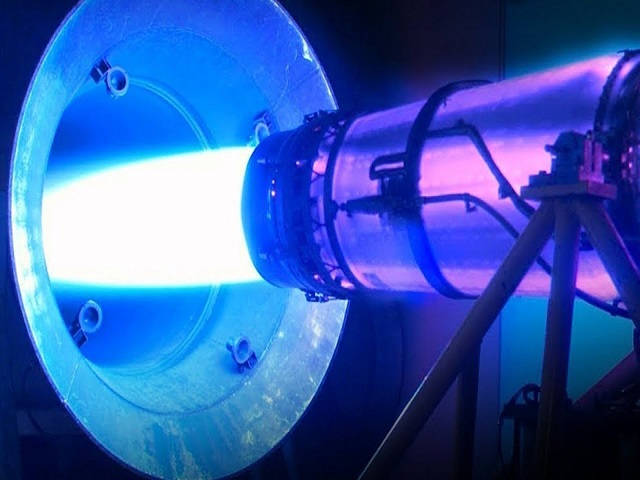
Microwave plasma technology refers to a method of creating and controlling plasma using microwave energy.
Engineered precision for Microwave Plasma Technology.
Microwave plasma technology refers to a method of creating and controlling plasma using microwave energy. Plasma is considered the fourth state of matter and is formed when a gas is heated to extremely high temperatures, causing the atoms to ionize and become electrically charged.
In traditional plasma systems, such as those used in fluorescent lights or plasma TVs, the plasma is generated through direct electrical discharge or radio frequency (RF) energy. Microwave plasma technology, on the other hand, utilizes microwaves to create and sustain the plasma.
The basic setup of a microwave plasma system involves a microwave generator, a waveguide, and a plasma chamber. The microwave generator produces high-power microwaves, typically at a frequency of 2.45 GHz, which are then guided into the plasma chamber through a waveguide. The microwaves excite the gas molecules in the chamber, causing them to collide and ionize, forming a plasma.
Microwave plasma technology finds applications in various fields, including nanotechnology, semiconductor manufacturing, surface modification, waste treatment, and environmental remediation. It is employed for processes such as thin film deposition, plasma etching, plasma-enhanced atomic layer deposition (PEALD), and plasma-assisted combustion.
These features contribute to the effectiveness and versatility of microwave plasma technology in various industrial processes. The efficient transfer of energy, precise control over plasma parameters, and operational flexibility make it a valuable tool for applications ranging from material processing and surface modification to waste treatment and environmental remediation.
The thermodynamic architecture of our Microwave Plasma Technology incorporates advanced thermal modeling and computational fluid dynamics (CFD) to ensure optimal heat and mass transfer across the entire processing zone. By precisely controlling thermal gradients, air velocity profiles, and direct energy delivery mechanisms, the system achieves uniform treatment while preventing localized overheating, product degradation, or thermal stress. This balance of intensive heat transfer and controlled retention time ensures maximum operational throughput with minimal specific energy consumption.
Built with heavy-duty structural engineering and sanitary metallurgy, each unit is manufactured to withstand continuous 24/7 industrial operating conditions. Contact surfaces are finished in high-grade stainless steel (SS 304, SS 316L, or corrosion-resistant alloys) with sanitary mirror-polish options, CIP/SIP washdown provisions, and hermetic chamber sealing. This guarantees full compliance with stringent international hygiene, CE machinery directives, and cGMP standards across food, pharmaceutical, specialty chemical, and heavy manufacturing applications.
Proprietary control algorithms ensure strict process repeatability, while built-in safety interlocks and electromagnetic shielding comply with international CE and OSHA standards. Full process development support — including material loss tangent testing, moisture sorption isotherms, and pilot trials at our Ambernath R&D facility — ensures the selected technology matches your exact industrial throughput goals.
Product & Systems Gallery
Explore authentic high-resolution photographs of industrial machinery, pilot trial rigs, and continuous turnkey processing installations engineered by Kerone Engineering Solutions for Microwave Plasma Technology. Each system is fabricated at our ISO 9001:2015 certified manufacturing facilities with precision laser cutting, robotic welding, and stringent Factory Acceptance Testing (FAT).
Microwave Plasma Technology
Click to view high-res
Microwave Plasma Technology
Click to view high-res
Microwave Plasma Technology
Click to view high-res
Microwave Plasma Technology
Click to view high-res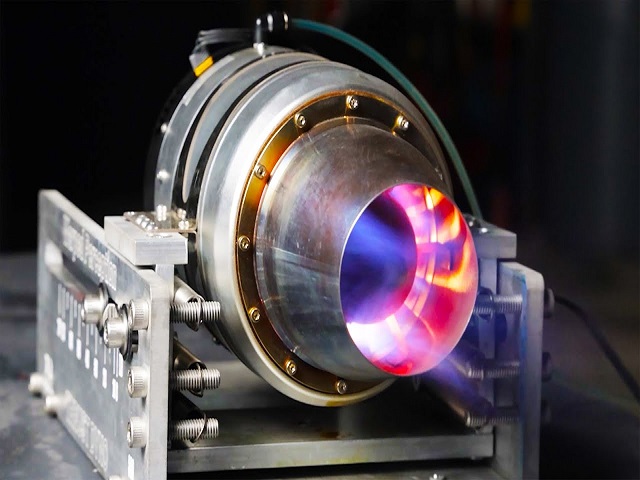
Microwave Plasma Technology
Click to view high-res
Microwave Plasma Technology
Click to view high-res50+ Years of Thermal Engineering Leadership.
Since 1976, Kerone Engineering Solutions has delivered over 5,000 custom-engineered thermal and process installations across 50+ countries. In technical collaboration with premier global institutions like CSIR-CEERI and University of Nottingham research partnerships, we design and manufacture high-efficiency machinery that minimizes production downtime and cuts operating expenses.
Unlike standard off-the-shelf equipment suppliers, Kerone operates a complete pilot-scale testing facility at our KRDC Ambernath center. We validate your exact raw material properties — determining moisture sorption isotherms, specific heat capacity, and dielectric behavior — before finalizing equipment sizing, ensuring zero risk during industrial scale-up.
Engineering precision, built into every system.
High Thermal and Processing
High thermal and processing efficiency
Low Maintenance and Easy
Low maintenance and easy operation
Suitable
Suitable for heat-sensitive materials
Fully Adjustable and
Fully adjustable and customizable process parameters
Available in Batch and
Available in batch and continuous configurations
Uniform Processing and
Uniform processing and consistent product quality
Powered by AI, Machine Learning & Smart IoT Integration
Modern industrial processing requires unprecedented thermal precision, energy efficiency, and operational agility. Kerone equips each system with high-speed industrial edge computing controllers, multi-spectral non-contact infrared pyrometry, and proprietary closed-loop machine learning algorithms that continuously analyze process parameters in real time.
The intelligent automation stack monitors dynamic changes in incoming material load, bed thickness, moisture content, and environmental factors. In response, our algorithms dynamically adjust heater power arrays, generator frequency, conveyor drive velocities, and exhaust dampers within milliseconds — entirely eliminating product burn, under-processing, or thermal hotspotting.
Seamlessly integrated with factory-wide SCADA and enterprise ERP architectures via native MQTT, OPC-UA, and Modbus TCP protocols, our systems deliver complete digital recipe control, remote diagnostics, predictive maintenance alerting, and tamper-evident batch logs compliant with global FDA 21 CFR Part 11 and cGMP standards.
Adaptive Heat Modulation
Neural algorithms detect material thermal variations in real time (<50ms response) and tune generator frequency and power arrays automatically.
IoT Cloud Telemetry
Continuous bidirectional telemetry stream via MQTT/OPC-UA protocols directly to centralized plant SCADA, MES, or mobile engineer dashboards.
Predictive Maintenance
Monitors magnetron cathode current, vibration frequency signatures, and differential filter pressure to schedule AMC maintenance before failures occur.
Quality & Batch Traceability
Automated digital recipe execution, multi-stage temperature ramp/soak curves, and cryptographically signed electronic batch logs compliant with 21 CFR Part 11.
Engineered for High-Value Industrial Sectors
Tailored thermal and process configurations across continuous manufacturing lines.
Food industry processing systems
Food industry processing systems
Chemical and polymer processing
Chemical and polymer processing
Pharmaceutical ingredients and inte...
Pharmaceutical ingredients and intermediates
Ready‑to‑eat (RTE) food production
Ready‑to‑eat (RTE) food production
Specialized heating, drying, or mat...
Specialized heating, drying, or material transformation processes
Industrial material modification an...
Industrial material modification and thermal treatment
Configured to Your Process Window
Technical parameter envelopes across industrial manufacturing and engineering architectures.
Frequently Asked Questions
Engineering answers regarding equipment sizing, integration, and process performance.
It is used for efficient processing, heating, drying or material transformation.
High efficiency, process reliability and complete customization.
Yes, Kerone offers fully customized engineering solutions.
Food, chemical, pharma, biomass, rubber, textile and more.
Kerone ensures high product quality through strict engineering standards, advanced testing procedures, and precision-controlled manufacturing systems.
Argon, nitrogen, oxygen, hydrogen, helium, air, and reactive gas mixtures can be used, with each producing different plasma characteristics and reactive species.
Yes, high-power microwave plasma systems operating at tens to hundreds of kilowatts are used for industrial-scale waste treatment, chemical synthesis, and materials processing.
Optical emission spectroscopy (OES) analyzes the light emitted by excited plasma species to determine plasma composition, temperature, and energy distribution in real time.
Microwave energy can sustain a stable plasma discharge at higher gas pressures than DC or many RF discharge methods because the rapidly oscillating electric field at 2.45 GHz efficiently transfers energy to electrons even when collision rates are higher at atmospheric pressure. Lower-frequency or DC plasma sources typically require reduced pressure to maintain the electron mean free path needed for sustained ionization. This atmospheric-pressure capability is what allows microwave plasma systems to be integrated into open production lines without the cost, complexity, and cycle-time penalty of vacuum chambers, while still delivering the high reactive-species density needed for effective surface treatment or material processing.
Plasma uniformity at lab scale is relatively easy to achieve in a small, well-characterized cavity, but scaling to industrial dimensions introduces challenges from standing wave patterns and uneven field distribution across a larger treatment area. Kerone addresses this through multi-applicator configurations, mode-stirring techniques, and careful waveguide design that distributes microwave energy evenly across the treatment zone. Substrate movement, such as conveyor-based scanning beneath a linear plasma source, also helps average out any residual non-uniformity by ensuring every point on the material passes through the same plasma exposure profile rather than relying on a single static, perfectly uniform field.
Thermal plasma exists in local thermodynamic equilibrium, where ions, electrons, and neutral gas molecules all reach similar high temperatures, making it suitable for applications like waste vitrification or high-temperature material synthesis that require intense, concentrated heat. Non-thermal (or non-equilibrium) plasma keeps electron temperature much higher than the surrounding gas temperature, generating highly reactive chemical species without significantly heating the bulk material. This distinction determines application fit: non-thermal plasma is preferred for treating heat-sensitive surfaces, polymers, or biological materials, while thermal plasma is selected when the process goal is bulk material transformation or destruction requiring substantial energy input.
In plasma-enhanced chemical vapor deposition, microwave-generated plasma provides the activation energy needed to decompose precursor gases at lower substrate temperatures than thermal CVD alone would require, which is essential for temperature-sensitive semiconductor substrates and multilayer structures. For plasma etching, the reactive ions and radicals generated by the microwave discharge selectively remove material from exposed surfaces with high directionality and minimal substrate damage when process parameters are properly tuned. Both applications depend on precise control over plasma density, gas chemistry, and substrate bias, which is why semiconductor-grade microwave plasma systems require tighter process control tolerances than general industrial surface treatment equipment.
Validation typically involves running multiple trial batches under nominally identical conditions and measuring the resulting surface or material properties to confirm tolerances are consistently met. Process parameters including microwave power, gas flow, pressure, and treatment time are logged for each trial run, allowing statistical analysis of variation sources before the recipe is locked for production. Optical emission spectroscopy is often used during this validation phase to confirm that plasma composition remains stable across repeated runs, since drift in reactive species concentration can indicate gas delivery or power supply issues that need correction before scale-up.
Microwave plasma is applied in waste gas treatment to break down volatile organic compounds and certain hazardous air pollutants into simpler, less harmful molecules through the reactive radical chemistry the plasma generates. It is also used in soil and water remediation contexts where contaminants need to be broken down without introducing additional chemical reagents. The non-thermal plasma variant is particularly useful here because it can drive oxidation reactions effectively without the high energy cost of heating the entire waste stream to combustion temperatures, making it a more energy-efficient option for treating dilute contaminant streams compared to thermal incineration.
Magnetron lifespan in continuous industrial duty typically ranges from several thousand to over ten thousand operating hours depending on power level, duty cycle, and cooling system performance, with solid-state generator alternatives generally offering longer service life at a higher upfront cost. Waveguide components and plasma chamber windows experience minimal wear under normal operation but should be inspected periodically for any coating deposition that could affect microwave transmission efficiency. Kerone provides expected service intervals for each major component as part of system documentation, allowing maintenance teams to plan replacement proactively rather than reactively after a failure interrupts production.

Let’s Engineer the Right Process.
From application trials to full-scale production systems, our engineering team works with you to develop the right thermal processing solution for your material, throughput, and production requirements.