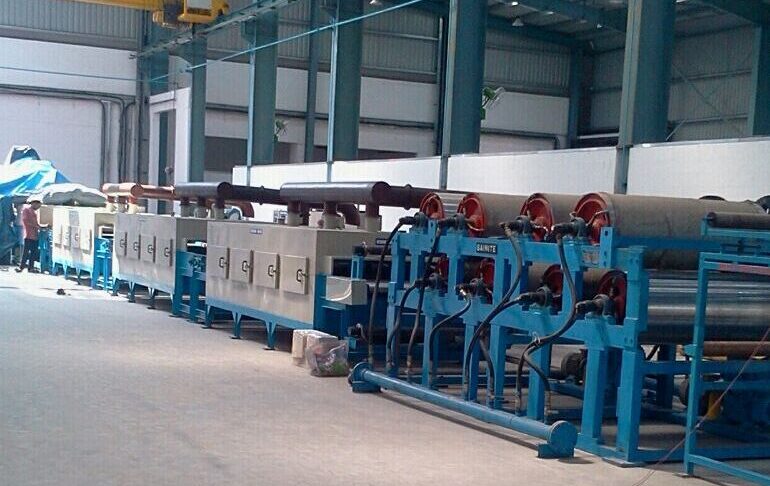
Microwave/Infrared Rubber Vulcanization Line
KERONE Engineering Solutions Ltd. is a pioneer in application and implementing engineering solutions with its vast experience and team of professionals.
Engineered precision for Microwave/Infrared Rubber Vulcanization Line.
KERONE Engineering Solutions Ltd. is a pioneer in application and implementing engineering solutions with its vast experience and team of professionals. Since last 50 years, it has been into designing, manufacturing & installing of Industrial machinery for various processing needs.
The engineers & professionals at KERONE have in depth knowledge of different heating technologies and provide solutions applying them in a huge no. of Industrial machines.
e. ” Uncured natural rubber is sticky, deforms easily when warm, and is brittle when cold and hence is very poor in elasticity. Vulcanized materials are less sticky and have superior mechanical properties. The process is named after Vulcan, the Roman God of Fire. A vast array of products are made with vulcanized rubber including tires, sealings, shoe soles, hoses etc.
The process of rubber vulcanization can be carried out using the following two heating systems:
Infrared rubber curing systems are highly efficient for the pre-vulcanization of rubber profiles and hoses. Positioned between the rubber extruder and the continuous vulcanization line, high-power infrared radiation pre-cures the surface of rubber products. This surface pre-curing improves dimensional stability and enhances surface finish quality.
The thermodynamic architecture of our Microwave/Infrared Rubber Vulcanization Line incorporates advanced thermal modeling and computational fluid dynamics (CFD) to ensure optimal heat and mass transfer across the entire processing zone. By precisely controlling thermal gradients, air velocity profiles, and direct energy delivery mechanisms, the system achieves uniform treatment while preventing localized overheating, product degradation, or thermal stress. This balance of intensive heat transfer and controlled retention time ensures maximum operational throughput with minimal specific energy consumption.
Built with heavy-duty structural engineering and sanitary metallurgy, each unit is manufactured to withstand continuous 24/7 industrial operating conditions. Contact surfaces are finished in high-grade stainless steel (SS 304, SS 316L, or corrosion-resistant alloys) with sanitary mirror-polish options, CIP/SIP washdown provisions, and hermetic chamber sealing. This guarantees full compliance with stringent international hygiene, CE machinery directives, and cGMP standards across food, pharmaceutical, specialty chemical, and heavy manufacturing applications.
Proprietary control algorithms ensure strict process repeatability, while built-in safety interlocks and electromagnetic shielding comply with international CE and OSHA standards. Full process development support — including material loss tangent testing, moisture sorption isotherms, and pilot trials at our Ambernath R&D facility — ensures the selected technology matches your exact industrial throughput goals.
Product & Systems Gallery
Explore authentic high-resolution photographs of industrial machinery, pilot trial rigs, and continuous turnkey processing installations engineered by Kerone Engineering Solutions for Microwave/Infrared Rubber Vulcanization Line. Each system is fabricated at our ISO 9001:2015 certified manufacturing facilities with precision laser cutting, robotic welding, and stringent Factory Acceptance Testing (FAT).
Microwave/Infrared Rubber Vulcanization Line
Click to view high-res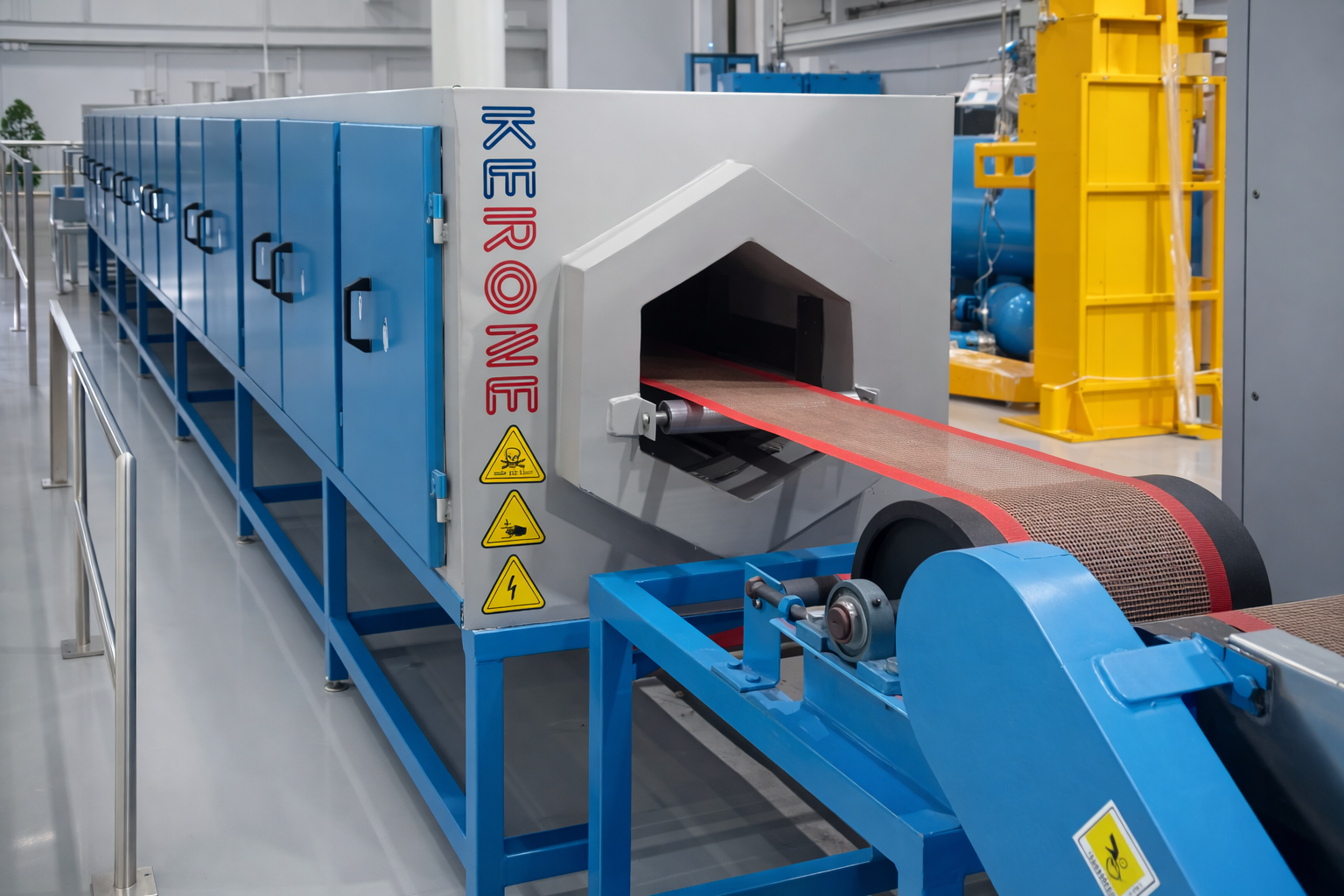
Microwave/Infrared Rubber Vulcanization Line
Click to view high-res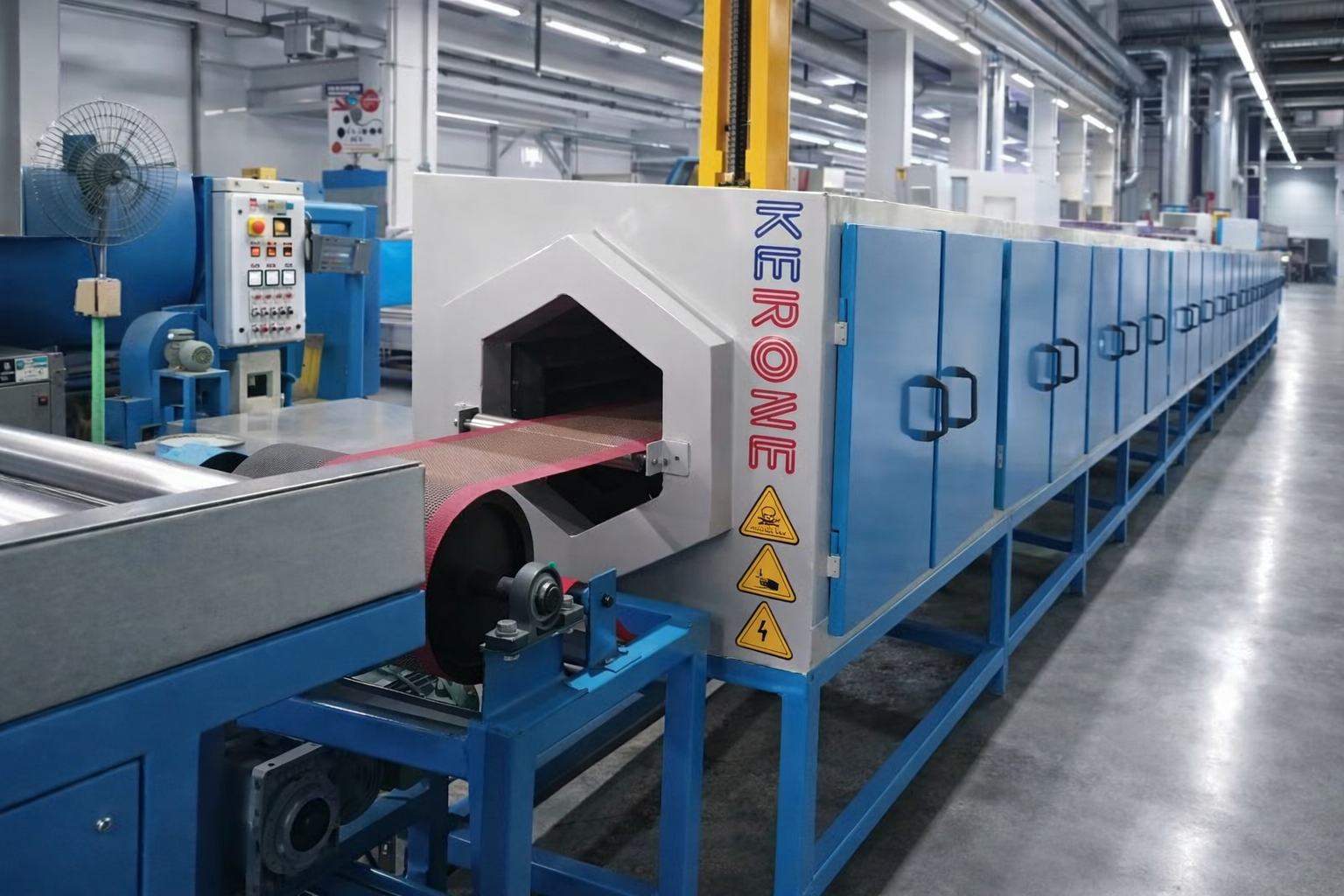
Microwave/Infrared Rubber Vulcanization Line
Click to view high-res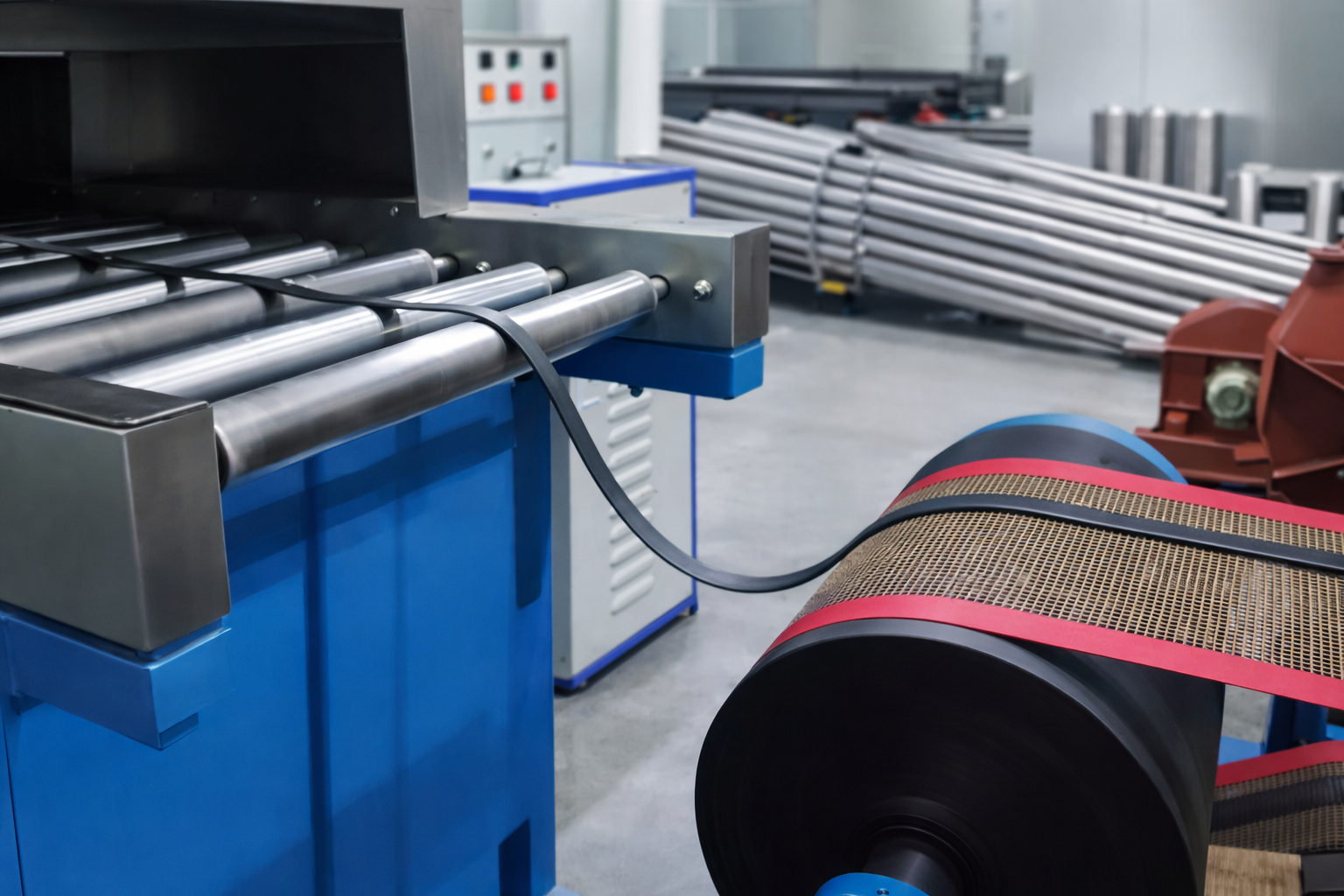
Microwave/Infrared Rubber Vulcanization Line
Click to view high-res
Microwave/Infrared Rubber Vulcanization Line
Click to view high-res
Microwave/Infrared Rubber Vulcanization Line
Click to view high-res50+ Years of Thermal Engineering Leadership.
Since 1976, Kerone Engineering Solutions has delivered over 5,000 custom-engineered thermal and process installations across 50+ countries. In technical collaboration with premier global institutions like CSIR-CEERI and University of Nottingham research partnerships, we design and manufacture high-efficiency machinery that minimizes production downtime and cuts operating expenses.
Unlike standard off-the-shelf equipment suppliers, Kerone operates a complete pilot-scale testing facility at our KRDC Ambernath center. We validate your exact raw material properties — determining moisture sorption isotherms, specific heat capacity, and dielectric behavior — before finalizing equipment sizing, ensuring zero risk during industrial scale-up.
Engineering precision, built into every system.
High Thermal and Processing
High thermal and processing efficiency
Low Maintenance and Easy
Low maintenance and easy operation
Suitable
Suitable for heat-sensitive materials
Fully Adjustable and
Fully adjustable and customizable process parameters
Available in Batch and
Available in batch and continuous configurations
Uniform Processing and
Uniform processing and consistent product quality
Powered by AI, Machine Learning & Smart IoT Integration
Modern industrial processing requires unprecedented thermal precision, energy efficiency, and operational agility. Kerone equips each system with high-speed industrial edge computing controllers, multi-spectral non-contact infrared pyrometry, and proprietary closed-loop machine learning algorithms that continuously analyze process parameters in real time.
The intelligent automation stack monitors dynamic changes in incoming material load, bed thickness, moisture content, and environmental factors. In response, our algorithms dynamically adjust heater power arrays, generator frequency, conveyor drive velocities, and exhaust dampers within milliseconds — entirely eliminating product burn, under-processing, or thermal hotspotting.
Seamlessly integrated with factory-wide SCADA and enterprise ERP architectures via native MQTT, OPC-UA, and Modbus TCP protocols, our systems deliver complete digital recipe control, remote diagnostics, predictive maintenance alerting, and tamper-evident batch logs compliant with global FDA 21 CFR Part 11 and cGMP standards.
Adaptive Heat Modulation
Neural algorithms detect material thermal variations in real time (<50ms response) and tune generator frequency and power arrays automatically.
IoT Cloud Telemetry
Continuous bidirectional telemetry stream via MQTT/OPC-UA protocols directly to centralized plant SCADA, MES, or mobile engineer dashboards.
Predictive Maintenance
Monitors magnetron cathode current, vibration frequency signatures, and differential filter pressure to schedule AMC maintenance before failures occur.
Quality & Batch Traceability
Automated digital recipe execution, multi-stage temperature ramp/soak curves, and cryptographically signed electronic batch logs compliant with 21 CFR Part 11.
Engineered for High-Value Industrial Sectors
Tailored thermal and process configurations across continuous manufacturing lines.
Automobile Industry
Automobile Industry
Chemical and polymer processing
Chemical and polymer processing
Pharmaceutical ingredients and inte...
Pharmaceutical ingredients and intermediates
Sports goods
Sports goods
General Rubber Industry
General Rubber Industry
Industrial material modification
Industrial material modification
Configured to Your Process Window
Technical parameter envelopes across industrial manufacturing and engineering architectures.
Frequently Asked Questions
Engineering answers regarding equipment sizing, integration, and process performance.
It is used for efficient processing, heating, drying or material transformation.
High efficiency, process reliability and complete customization.
Yes, Kerone offers fully customized engineering solutions.
Food, chemical, pharma, biomass, rubber, textile and more.
Kerone ensures high product quality through strict engineering standards, advanced testing procedures, and precision-controlled manufacturing systems.
EPDM, silicone, SBR, NBR, HNBR, CR, and most standard extruded rubber compounds can be vulcanized on Kerone's microwave/infrared lines.
Microwave/infrared vulcanization eliminates the need for hazardous salt handling, provides superior heating uniformity, requires no post-processing washing, and is more energy efficient.
Product samples are tested for hardness, compression set, tensile properties, and cross-link density following standard rubber test methods (ISO, ASTM).
Microwave energy heats rubber volumetrically from the core outward, which is ideal for curing the bulk of an extruded profile, but it does not always deliver an optimal surface finish on its own. Infrared heating, positioned between the extruder and the main vulcanization tunnel, pre-cures the outer skin of the rubber profile quickly, improving dimensional stability and surface quality before the part enters the microwave section. The combination addresses the limitation of each technology used alone: infrared alone struggles with thick sections because rubber is a poor thermal conductor, while microwave alone can leave surface finish less refined than infrared pre-curing achieves. Running both in sequence produces a profile that is uniformly cured through its cross-section while maintaining the surface quality manufacturers expect from extruded rubber goods like hoses and seals.
Typical configurations handle throughput in the range of 50 to 500 kilograms per hour, with conveying speed adjustable between roughly 2 and 50 meters per minute depending on profile cross-section and cure requirements. Installed microwave power generally ranges from about 1.45 kW to 29 kW, scaled to match line speed and rubber compound. These figures vary significantly based on the cross-sectional area of the profile being cured, since thicker or denser profiles require longer residence time in the tunnel to achieve full cross-link density. Manufacturers should size their line based on the heaviest, slowest-curing profile in their product mix rather than an average across their full product range, since under-sizing for the most demanding product creates a bottleneck.
Cure quality is typically verified through standard rubber testing methods, including hardness measurement, compression set testing, tensile property evaluation, and cross-link density analysis, following recognized ISO or ASTM test protocols. Buyers evaluating a new line should request sample output from their own compound formulation rather than relying solely on generic reference material, since cure response varies by compound family and filler loading. It is also worth asking suppliers to demonstrate consistency across the full width or diameter of a profile, not just a single test point, since uneven cure across a cross-section is a common failure mode in continuous vulcanization that single-point testing can miss. A trial run with documented before-and-after test data gives the clearest picture of expected production quality.
Microwave and infrared vulcanization eliminate the hazardous handling, storage, and disposal concerns associated with molten salt baths, removes the need for post-cure washing to remove salt residue from finished profiles, and generally achieves more uniform heating throughout the cross-section. It is also more energy efficient since the system heats only the rubber and the immediate process zone rather than maintaining a large molten salt reservoir at temperature continuously. Salt bath systems may still be selected in operations already heavily invested in that infrastructure or for specific legacy product lines where switching technology would require extensive requalification. For most new installations or capacity expansions, however, the operational, safety, and environmental advantages of microwave/infrared systems make them the preferred choice.
EPDM, silicone, SBR, NBR, HNBR, and chloroprene rubber, along with most standard extruded rubber compounds, vulcanize effectively on microwave/infrared lines. The technology is particularly well suited to continuous profile products such as hoses, seals, gaskets, and weatherstripping where consistent cross-sectional cure and dimensional accuracy are critical. Compounds with very low polarity or minimal moisture content may require process adjustments or supplemental heating elements to achieve adequate energy coupling, which is why a compound-specific trial is recommended before full-scale commitment. Manufacturers running multiple compound types on the same line should expect to maintain a library of validated process parameters for each formulation rather than using a single universal setting.
Infrared pre-curing sections are typically compact, often around one meter in length, positioned directly after the extruder, while the microwave tunnel section is sized to match required residence time at the line's target speed. Compared to long salt bath tanks or extended hot-air curing tunnels that need significant linear floor space to achieve adequate dwell time, microwave-based curing tunnels are generally more compact for a given throughput because energy penetrates the material directly rather than relying on slow surface-to-core heat conduction. This compactness can be a meaningful advantage for manufacturers retrofitting curing technology into an existing building footprint where extending tunnel length is not feasible.
These lines incorporate integrated safety interlocks tied to a remote control panel, ensuring the microwave section cannot operate with access panels open or conveyor guarding removed. Step-less power control through a microcontroller module allows precise power adjustment rather than abrupt on/off switching, reducing the risk of power spikes. Digital displays provide real-time visibility into power and temperature parameters so operators can identify abnormal readings before they become safety issues. Microwave leakage containment is engineered into the tunnel design and verified against international electromagnetic safety standards, similar to the safety architecture used across Kerone's broader range of microwave processing equipment.
Let’s Engineer the Right Process.
From application trials to full-scale production systems, our engineering team works with you to develop the right thermal processing solution for your material, throughput, and production requirements.