
Microwave Heating in Pharmaceutical
At Kerone, we have been helping our pharmaceutical and chemical processing client since last many years with our microwave heating/drying systems for the peroration of dosage, chemical reactions, sterilisation & disinfection, drying of powders, tablet coating, agglomerates, preparing get beads.
Engineered precision for Microwave Heating in Pharmaceutical.
At Kerone, we have been helping our pharmaceutical and chemical processing client since last many years with our microwave heating/drying systems for the peroration of dosage, chemical reactions, sterilisation & disinfection, drying of powders, tablet coating, agglomerates, preparing get beads. The microwave heating has opened a new method to regulator the physicochemical properties and drug delivery rate of pharmaceutical dosage without the need for excessive heat, lengthy process or toxic reactants.
Microwave heating is no longer a new technological concept; however, its effective utilization in pharmaceutical and chemical processing has created significant advancements in productivity and quality. Microwave heating systems offer higher processing rates in less time while preserving the texture and physicochemical properties of materials.
At Kerone, we have been supporting pharmaceutical and chemical processing industries for over 40 years with advanced microwave heating and drying systems. Our solutions are used for preparation of dosage forms, chemical reactions, sterilization and disinfection, powder drying, tablet coating, agglomeration, and bead preparation. Microwave heating enables better control of physicochemical properties and drug delivery rates without excessive heat exposure, long processing times, or toxic reactants.
Drug extraction involves separating active and inactive components through selective extraction procedures. Conventional techniques are time-consuming, solvent-intensive, and thermally unstable. Kerone’s microwave-based extraction systems enable faster extraction, reduced solvent consumption, and protection against thermal degradation.
Microwave digestion breaks down samples into basic constituents for chemical analysis using microwave-absorbing reagents inside pressurized containers. Closed microwave-transparent vessels allow heating between 200°C and 260°C for complete degradation and dissolution.
The thermodynamic architecture of our Microwave Heating in Pharmaceutical incorporates advanced thermal modeling and computational fluid dynamics (CFD) to ensure optimal heat and mass transfer across the entire processing zone. By precisely controlling thermal gradients, air velocity profiles, and direct energy delivery mechanisms, the system achieves uniform treatment while preventing localized overheating, product degradation, or thermal stress. This balance of intensive heat transfer and controlled retention time ensures maximum operational throughput with minimal specific energy consumption.
Built with heavy-duty structural engineering and sanitary metallurgy, each unit is manufactured to withstand continuous 24/7 industrial operating conditions. Contact surfaces are finished in high-grade stainless steel (SS 304, SS 316L, or corrosion-resistant alloys) with sanitary mirror-polish options, CIP/SIP washdown provisions, and hermetic chamber sealing. This guarantees full compliance with stringent international hygiene, CE machinery directives, and cGMP standards across food, pharmaceutical, specialty chemical, and heavy manufacturing applications.
Proprietary control algorithms ensure strict process repeatability, while built-in safety interlocks and electromagnetic shielding comply with international CE and OSHA standards. Full process development support — including material loss tangent testing, moisture sorption isotherms, and pilot trials at our Ambernath R&D facility — ensures the selected technology matches your exact industrial throughput goals.
Product & Systems Gallery
Explore authentic high-resolution photographs of industrial machinery, pilot trial rigs, and continuous turnkey processing installations engineered by Kerone Engineering Solutions for Microwave Heating in Pharmaceutical. Each system is fabricated at our ISO 9001:2015 certified manufacturing facilities with precision laser cutting, robotic welding, and stringent Factory Acceptance Testing (FAT).
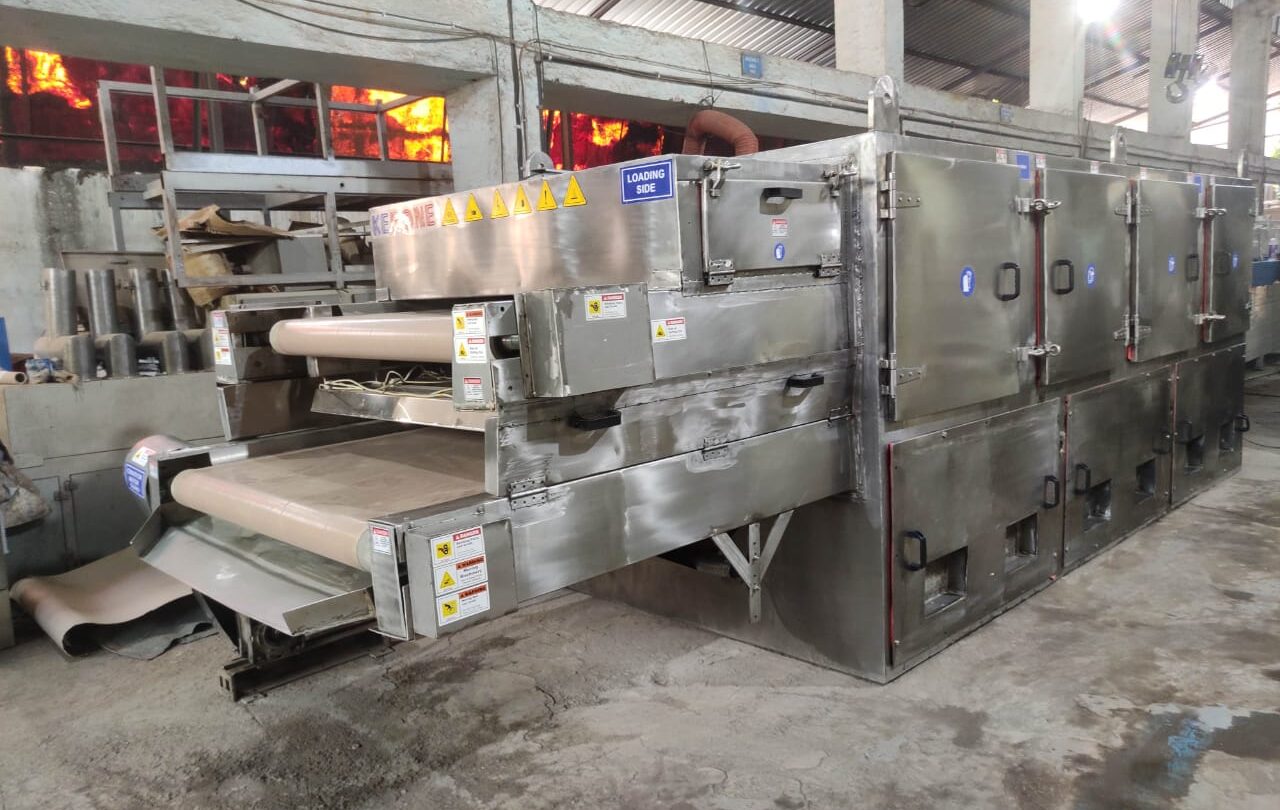
Microwave Heating in Pharmaceutical
Click to view high-res
Microwave Heating in Pharmaceutical
Click to view high-res
Microwave Heating in Pharmaceutical
Click to view high-res
Microwave Heating in Pharmaceutical
Click to view high-res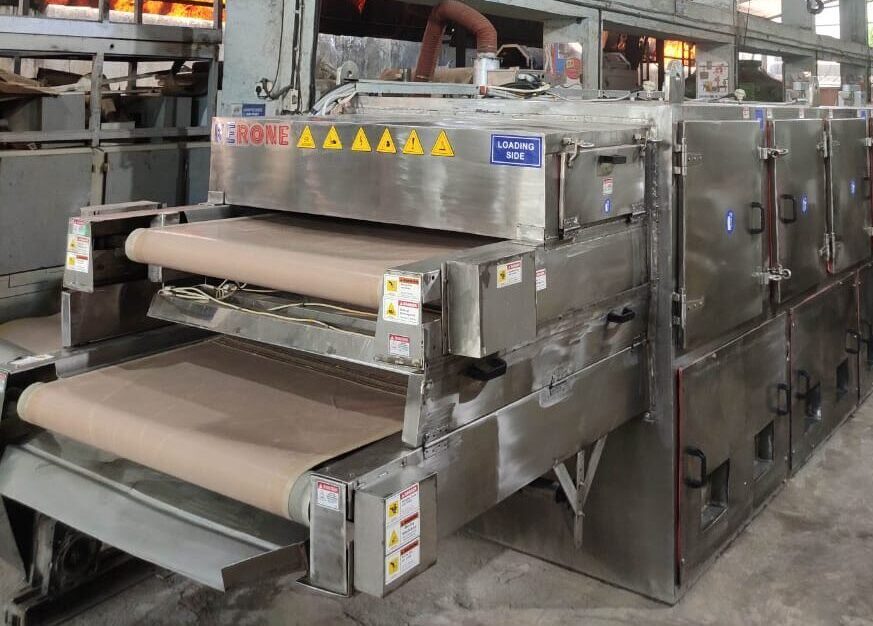
Microwave Heating in Pharmaceutical
Click to view high-res
Microwave Heating in Pharmaceutical
Click to view high-res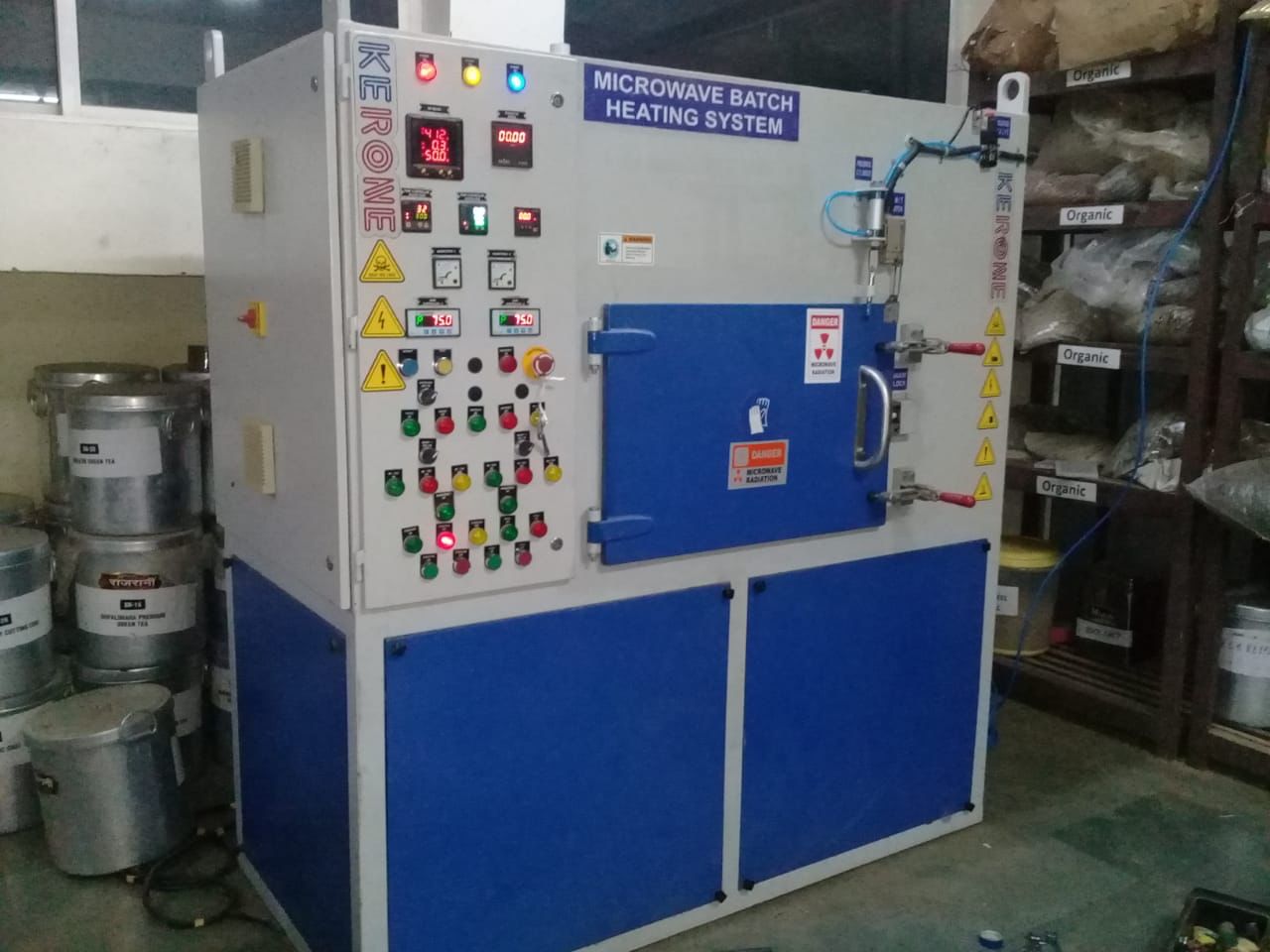
Microwave Heating in Pharmaceutical
Click to view high-res
Microwave Heating in Pharmaceutical
Click to view high-res50+ Years of Thermal Engineering Leadership.
Since 1976, Kerone Engineering Solutions has delivered over 5,000 custom-engineered thermal and process installations across 50+ countries. In technical collaboration with premier global institutions like CSIR-CEERI and University of Nottingham research partnerships, we design and manufacture high-efficiency machinery that minimizes production downtime and cuts operating expenses.
Unlike standard off-the-shelf equipment suppliers, Kerone operates a complete pilot-scale testing facility at our KRDC Ambernath center. We validate your exact raw material properties — determining moisture sorption isotherms, specific heat capacity, and dielectric behavior — before finalizing equipment sizing, ensuring zero risk during industrial scale-up.
Engineering precision, built into every system.
High Thermal and Processing
High thermal and processing efficiency
Low Maintenance and Easy
Low maintenance and easy operation
Suitable
Suitable for heat-sensitive materials
Fully Adjustable and
Fully adjustable and customizable process parameters
Available in Batch and
Available in batch and continuous configurations
Uniform Processing and
Uniform processing and consistent product quality
Powered by AI, Machine Learning & Smart IoT Integration
Modern industrial processing requires unprecedented thermal precision, energy efficiency, and operational agility. Kerone equips each system with high-speed industrial edge computing controllers, multi-spectral non-contact infrared pyrometry, and proprietary closed-loop machine learning algorithms that continuously analyze process parameters in real time.
The intelligent automation stack monitors dynamic changes in incoming material load, bed thickness, moisture content, and environmental factors. In response, our algorithms dynamically adjust heater power arrays, generator frequency, conveyor drive velocities, and exhaust dampers within milliseconds — entirely eliminating product burn, under-processing, or thermal hotspotting.
Seamlessly integrated with factory-wide SCADA and enterprise ERP architectures via native MQTT, OPC-UA, and Modbus TCP protocols, our systems deliver complete digital recipe control, remote diagnostics, predictive maintenance alerting, and tamper-evident batch logs compliant with global FDA 21 CFR Part 11 and cGMP standards.
Adaptive Heat Modulation
Neural algorithms detect material thermal variations in real time (<50ms response) and tune generator frequency and power arrays automatically.
IoT Cloud Telemetry
Continuous bidirectional telemetry stream via MQTT/OPC-UA protocols directly to centralized plant SCADA, MES, or mobile engineer dashboards.
Predictive Maintenance
Monitors magnetron cathode current, vibration frequency signatures, and differential filter pressure to schedule AMC maintenance before failures occur.
Quality & Batch Traceability
Automated digital recipe execution, multi-stage temperature ramp/soak curves, and cryptographically signed electronic batch logs compliant with 21 CFR Part 11.
Engineered for High-Value Industrial Sectors
Tailored thermal and process configurations across continuous manufacturing lines.
Food industry processing systems
Food industry processing systems
Chemical and polymer processing
Chemical and polymer processing
Pharmaceutical ingredients and inte...
Pharmaceutical ingredients and intermediates
Ready‑to‑eat (RTE) food production
Ready‑to‑eat (RTE) food production
Specialized heating, drying, or mat...
Specialized heating, drying, or material transformation processes
Industrial material modification an...
Industrial material modification and thermal treatment
Configured to Your Process Window
Technical parameter envelopes across industrial manufacturing and engineering architectures.
Frequently Asked Questions
Engineering answers regarding equipment sizing, integration, and process performance.
It is used for efficient processing, heating, drying or material transformation.
High efficiency, process reliability and complete customization.
Yes, Kerone offers fully customized engineering solutions.
Food, chemical, pharma, biomass, rubber, textile and more.
Kerone ensures high product quality through strict engineering standards, advanced testing procedures, and precision-controlled manufacturing systems.
It offers faster processing times, uniform heating, precise temperature control, improved product quality, and enhanced energy efficiency compared to conventional heating methods.
Yes, when designed with proper control systems and validation protocols, microwave systems ensure consistent heating, product integrity, and compliance with industry standards.
With accurate process control, microwave heating maintains drug stability and reduces thermal degradation due to shorter exposure times.
In pharmaceutical manufacturing, microwave drying is increasingly used for granule drying, API drying, and coating operations because it reduces processing time, minimizes thermal stress on sensitive actives, and supports continuous manufacturing initiatives. Kerone's GMP-compliant microwave dryers meet FDA 21 CFR Part 11 data logging requirements and offer validated temperature, power, and humidity controls. They are especially effective for wet granulation processes, replacing fluid bed dryers in certain formulations where gentler, faster drying is required to prevent polymorphic transformations or degradation.
Conventional conduction heating relies on surface contact, which forces heat to travel inward through the material. This creates a temperature gradient where the outer layer is overheated long before the core reaches target temperature, risking polymorphic transformation or chemical breakdown of sensitive APIs. Microwave energy instead couples directly with polar molecules and ions throughout the entire mass simultaneously, so heating occurs from within rather than at the surface. Because the exposure time needed to reach target temperature is shorter and the temperature gradient is far smaller, sensitive actives experience less cumulative thermal stress. Kerone designs power and frequency profiles around the dielectric properties of each formulation, allowing precise control that keeps the drug substance within its stability window throughout drying, granulation, or synthesis.
Selecting the right microwave synthesis system starts with characterizing the reaction mixture's dielectric loss factor, since this determines how efficiently microwave energy couples into the solvent and reactants. Target reaction temperature, required pressure rating for the vessel, batch size, and desired cycle time all influence generator power and cavity design. Kerone's engineering team also evaluates whether the reaction is exothermic or endothermic, what gas evolution may occur, and whether online temperature and pressure monitoring is required for process control. These inputs determine magnetron power rating, vessel material compatibility, and whether a single-mode or multi-mode cavity design will deliver the uniformity the chemistry demands.
Payback periods vary by application but are typically driven by three savings categories: reduced cycle time increasing production capacity, lower energy consumption per batch compared to thermal or fluid bed alternatives, and reduced solvent usage in extraction processes. Facilities replacing lengthy conventional extraction or drying steps with microwave-assisted processing often see capacity gains that allow more batches per shift without adding floor space. Because microwave systems heat the product directly rather than heating the surrounding air or chamber, energy losses to the environment are minimal, which compounds savings over high-utilization production lines. A formal feasibility study using your specific material and throughput is the most reliable way to estimate payback for your facility.
Both options are available depending on the process step being upgraded. Standalone microwave units are common for digestion, synthesis, and small-batch drying where a dedicated cell makes sense. For continuous operations such as powder drying or tablet coating support, microwave modules can often be integrated in line with existing conveyors or coating pans, provided there is sufficient clearance for the waveguide and shielding enclosure. Kerone's engineering team conducts a site assessment covering available footprint, existing utilities, and material flow before recommending retrofit versus standalone configuration, since electrical supply capacity and exhaust requirements differ between the two approaches.
Conventional surface thawing exposes the outer layers of a frozen drug product to ambient or elevated temperature for an extended period while the core remains frozen, creating localized temperature differentials that can trigger unwanted side reactions or recrystallization at the boundary layer. Microwave thawing heats the entire mass more uniformly from within, shortening the total time the product spends in a partially thawed, chemically reactive state. This reduced exposure window lowers the probability of degradation pathways that depend on time and temperature, which is particularly relevant for biologics and temperature-sensitive formulations where even brief excursions can affect product integrity.
Because microwave heating excites oil molecules directly rather than relying on convective transfer, the key quality checks focus on confirming uniformity rather than just final temperature. Manufacturers typically monitor viscosity consistency across the batch, dropping point stability, and visual homogeneity to confirm there are no localized hot spots from uneven field distribution. Periodic verification of cavity field patterns and magnetron output ensures the system continues delivering consistent energy density as components age. Combining these checks with the faster, more uniform heating microwave technology provides typically results in tighter batch-to-batch quality variation than conduction-heated grease kettles.

Let’s Engineer the Right Process.
From application trials to full-scale production systems, our engineering team works with you to develop the right thermal processing solution for your material, throughput, and production requirements.