
Microwave Heating for Food
We provide solution to various needs of food industry with our heating /drying equipment, we have over 50 years’ experience in providing high quality heating solution.
Engineered precision for Microwave Heating for Food.
We provide solution to various needs of food industry with our heating /drying equipment, we have over 50 years’ experience in providing high quality heating solution. Our Microwave Heating for Food systems are designed to deliver high-efficiency processing, optimized performance, and consistent output across multiple industrial sectors.
Objective of blanching process is to inactivate or retard bacterial and enzyme action, which could otherwise cause rapid degeneration of quality. Blanching is carried out by exposing the entire product to high temperature for very short period of time directly to fruits and vegetables.
Traditional blanching method were done by the means of steam or hot water, Steam blanching usually take longer time , water blanching is faster as compared to steam however it results in great loss in terms of nutrients of food. Kerone’s microwave based blanching systems are on other hand are very efficient, advantages that microwave blanching offers are constant volumetric heating, nominal oven temperature gradients, and no blanching residual products, reduced energy costs, and reduced processing time.
Pasteurization and sterilization both aim to extend food shelf life. Pasteurization primarily eliminates pathogenic microorganisms and inactivates spoilage enzymes, mainly in liquid food products, whereas sterilization destroys all forms of microorganisms. Traditional microwave systems at 915 MHz faced challenges such as non-uniform energy distribution and inconsistent heating due to varying moisture content.
Kerone, in association with EMitech, Italy, has developed advanced microwave-based pasteurization and sterilization systems that overcome these limitations, delivering improved response time, output quality, efficiency, and precise control.
Thawing and tempering restore frozen food to usable condition before cooking. Conventional thawing requires large space and extended time, often affecting biological properties. Microwave heating defrosts from the core outward, ensuring uniform thawing with reduced processing time.
Kerone’s systems offer controlled microwave emission suitable for products such as whole chicken and corned beef, ensuring quality preservation and efficiency.
Drying reduces moisture content for preservation and is traditionally time and energy intensive. Microwave drying generates heat internally, enabling faster moisture removal compared to surface-based conventional drying. Kerone’s industrial microwave dryers meet high-accuracy requirements, deliver faster response times, and provide environmentally friendly solutions with superior efficiency.
The thermodynamic architecture of our Microwave Heating for Food incorporates advanced thermal modeling and computational fluid dynamics (CFD) to ensure optimal heat and mass transfer across the entire processing zone. By precisely controlling thermal gradients, air velocity profiles, and direct energy delivery mechanisms, the system achieves uniform treatment while preventing localized overheating, product degradation, or thermal stress. This balance of intensive heat transfer and controlled retention time ensures maximum operational throughput with minimal specific energy consumption.
Built with heavy-duty structural engineering and sanitary metallurgy, each unit is manufactured to withstand continuous 24/7 industrial operating conditions. Contact surfaces are finished in high-grade stainless steel (SS 304, SS 316L, or corrosion-resistant alloys) with sanitary mirror-polish options, CIP/SIP washdown provisions, and hermetic chamber sealing. This guarantees full compliance with stringent international hygiene, CE machinery directives, and cGMP standards across food, pharmaceutical, specialty chemical, and heavy manufacturing applications.
Proprietary control algorithms ensure strict process repeatability, while built-in safety interlocks and electromagnetic shielding comply with international CE and OSHA standards. Full process development support — including material loss tangent testing, moisture sorption isotherms, and pilot trials at our Ambernath R&D facility — ensures the selected technology matches your exact industrial throughput goals.
Product & Systems Gallery
Explore authentic high-resolution photographs of industrial machinery, pilot trial rigs, and continuous turnkey processing installations engineered by Kerone Engineering Solutions for Microwave Heating for Food. Each system is fabricated at our ISO 9001:2015 certified manufacturing facilities with precision laser cutting, robotic welding, and stringent Factory Acceptance Testing (FAT).
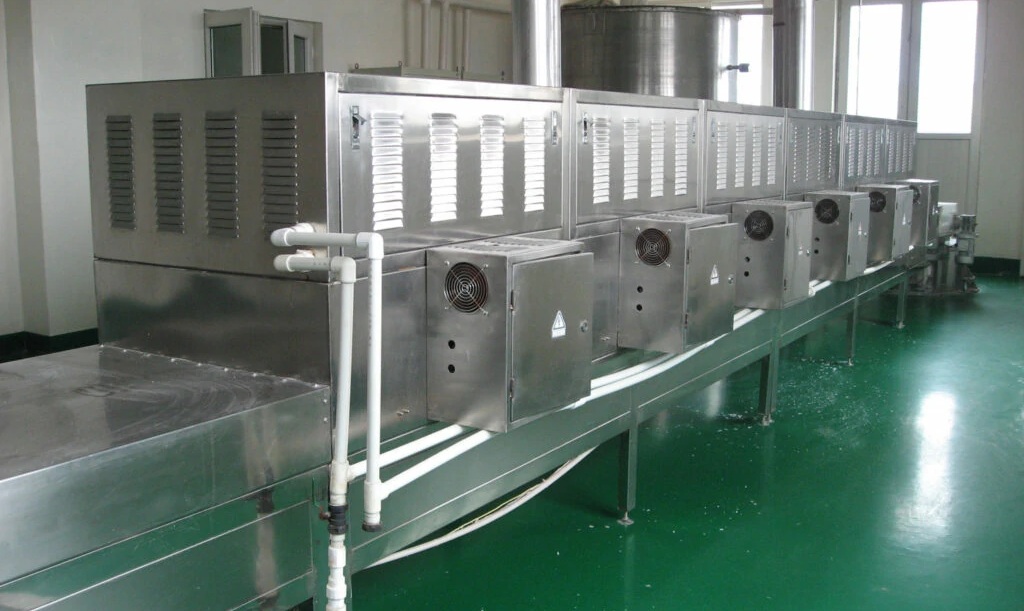
Microwave Heating for Food
Click to view high-res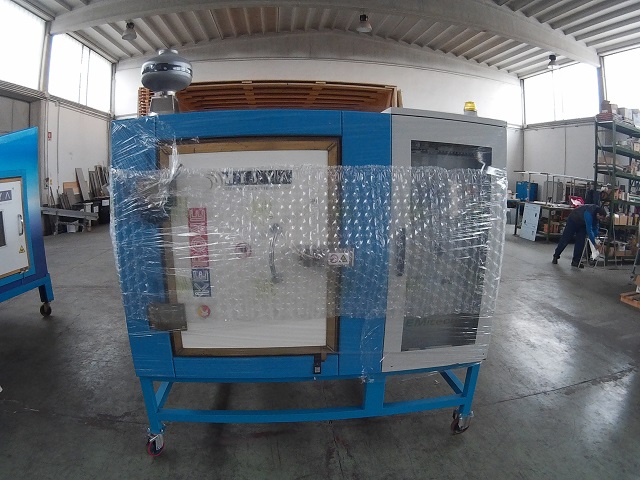
Microwave Heating for Food
Click to view high-res
Microwave Heating for Food
Click to view high-res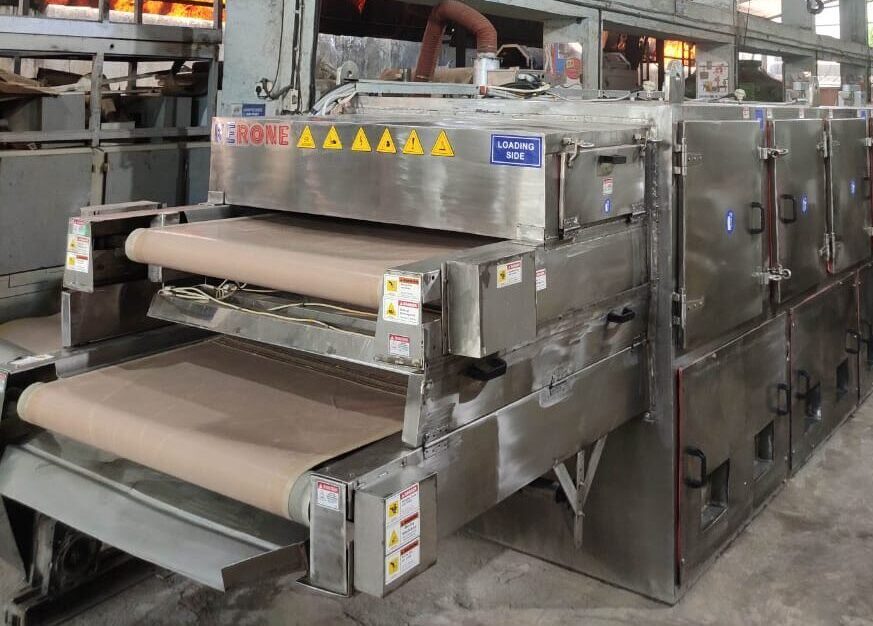
Microwave Heating for Food
Click to view high-res
Microwave Heating for Food
Click to view high-res
Microwave Heating for Food
Click to view high-res50+ Years of Thermal Engineering Leadership.
Since 1976, Kerone Engineering Solutions has delivered over 5,000 custom-engineered thermal and process installations across 50+ countries. In technical collaboration with premier global institutions like CSIR-CEERI and University of Nottingham research partnerships, we design and manufacture high-efficiency machinery that minimizes production downtime and cuts operating expenses.
Unlike standard off-the-shelf equipment suppliers, Kerone operates a complete pilot-scale testing facility at our KRDC Ambernath center. We validate your exact raw material properties — determining moisture sorption isotherms, specific heat capacity, and dielectric behavior — before finalizing equipment sizing, ensuring zero risk during industrial scale-up.
Engineering precision, built into every system.
High Thermal and Processing
High thermal and processing efficiency
Low Maintenance and Easy
Low maintenance and easy operation
Suitable
Suitable for heat-sensitive materials
Fully Adjustable and
Fully adjustable and customizable process parameters
Available in Batch and
Available in batch and continuous configurations
Uniform Processing and
Uniform processing and consistent product quality
Powered by AI, Machine Learning & Smart IoT Integration
Modern industrial processing requires unprecedented thermal precision, energy efficiency, and operational agility. Kerone equips each system with high-speed industrial edge computing controllers, multi-spectral non-contact infrared pyrometry, and proprietary closed-loop machine learning algorithms that continuously analyze process parameters in real time.
The intelligent automation stack monitors dynamic changes in incoming material load, bed thickness, moisture content, and environmental factors. In response, our algorithms dynamically adjust heater power arrays, generator frequency, conveyor drive velocities, and exhaust dampers within milliseconds — entirely eliminating product burn, under-processing, or thermal hotspotting.
Seamlessly integrated with factory-wide SCADA and enterprise ERP architectures via native MQTT, OPC-UA, and Modbus TCP protocols, our systems deliver complete digital recipe control, remote diagnostics, predictive maintenance alerting, and tamper-evident batch logs compliant with global FDA 21 CFR Part 11 and cGMP standards.
Adaptive Heat Modulation
Neural algorithms detect material thermal variations in real time (<50ms response) and tune generator frequency and power arrays automatically.
IoT Cloud Telemetry
Continuous bidirectional telemetry stream via MQTT/OPC-UA protocols directly to centralized plant SCADA, MES, or mobile engineer dashboards.
Predictive Maintenance
Monitors magnetron cathode current, vibration frequency signatures, and differential filter pressure to schedule AMC maintenance before failures occur.
Quality & Batch Traceability
Automated digital recipe execution, multi-stage temperature ramp/soak curves, and cryptographically signed electronic batch logs compliant with 21 CFR Part 11.
Engineered for High-Value Industrial Sectors
Tailored thermal and process configurations across continuous manufacturing lines.
Working life is more than conventio...
Working life is more than conventional heating systems
Lesser maintenance
Lesser maintenance
Condensed construction
Condensed construction
Ready‑to‑eat (RTE) food production
Ready‑to‑eat (RTE) food production
Accurately designed and engineered
Accurately designed and engineered
Hassle
free operational
Efficient performance
Efficient performance
Consume lesser power
Consume lesser power
Configured to Your Process Window
Technical parameter envelopes across industrial manufacturing and engineering architectures.
Frequently Asked Questions
Engineering answers regarding equipment sizing, integration, and process performance.
It is used for efficient processing, heating, drying or material transformation.
High efficiency, process reliability and complete customization.
Yes, Kerone offers fully customized engineering solutions.
Food, chemical, pharma, biomass, rubber, textile and more.
Kerone ensures high product quality through strict engineering standards, advanced testing procedures, and precision-controlled manufacturing systems.
Industrial microwave heating generates heat directly inside the food product through molecular interaction, which significantly reduces processing time. Because heating is rapid and uniform, it helps retain natural color, texture, flavor, and nutritional value better than conventional surface-heating methods. Shorter exposure to high temperatures also minimizes nutrient degradation and prevents overcooking.
Yes. Industrial microwave heating systems are designed for both batch and continuous processing. Conveyorized microwave tunnels allow consistent heating, pasteurization, tempering, drying, and sterilization in high-volume production environments. These systems can be integrated into automated food processing lines for improved efficiency and productivity.
Absolutely. Industrial microwave systems are designed with shielding and safety interlocks to prevent radiation leakage. The technology complies with international food safety and equipment standards. Additionally, microwave heating does not make food radioactive; it simply uses electromagnetic energy to generate heat within the product, making it a safe and reliable method for food processing.
For food processing, the best microwave drying systems combine microwave energy with controlled air flow to balance rapid drying with product quality preservation. Kerone's food-grade microwave dryers feature stainless steel construction, hygienic design with no dead spots, CIP compatibility, and precise power modulation. They are ideal for snacks, nuts, spices, herbs, seafood, ready-to-eat meals, and instant food products. Kerone's systems are available in continuous conveyor and tunnel configurations for high-throughput operations and in batch chamber designs for smaller productions or R&D.
Industrial microwave systems use a combination of metal enclosure shielding, which reflects microwave energy back into the treatment chamber rather than allowing it to escape, and specialized choke structures at any openings where product enters or exits the chamber, designed to suppress energy propagation along the product path beyond the sealed cavity. Door and access panel interlocks automatically cut microwave generation if a panel is opened during operation, preventing operator exposure during maintenance or product jams. These systems are designed and tested to meet international leakage limits well below levels considered hazardous, and routine leakage testing using calibrated survey meters is typically part of standard preventive maintenance to confirm shielding integrity hasn't degraded from wear or panel seal damage over time.
Direct linear scaling of microwave power based simply on throughput ratio between pilot and production scale often fails to achieve equivalent heating results, since factors like cavity geometry, product layer depth, and field distribution uniformity don't necessarily scale proportionally with capacity. Successful scale-up typically requires re-validating process parameters on the actual production-scale equipment using representative product samples, adjusting power density, conveyor speed, and zone configuration to achieve the same target temperature profile and uniformity demonstrated at pilot scale rather than assuming the pilot recipe transfers directly. This validation step is a common point where projects encounter delays if not planned for explicitly during the scale-up timeline, since it often reveals adjustments needed that weren't apparent from pilot-scale data alone.
Foods requiring significant surface browning, crisping, or Maillard reaction development for their characteristic sensory qualities, such as roasted or seared products, generally see limited benefit from microwave heating alone, since microwave energy doesn't inherently produce the surface dehydration and high-temperature browning that conventional dry-heat methods like roasting or grilling achieve. This is why many industrial applications combine microwave with infrared or hot air for a finishing stage when surface characteristics matter alongside internal heating speed. Very low-moisture or low-dielectric-loss-factor foods also heat less efficiently under microwave alone, since the mechanism depends substantially on water and ionic content within the product to generate heat through molecular interaction.
Magnetron output can gradually decline over thousands of operating hours even before complete failure, so periodic power output verification using calibrated measurement equipment helps catch this gradual drift before it compromises the lethality margin that pasteurization processes depend on. Process validation should also be repeated whenever a significant change occurs, such as magnetron replacement, conveyor speed range adjustment, or a meaningful shift in product formulation, rather than assuming the original validation remains valid indefinitely under all future operating conditions. Many food safety regulatory frameworks expect documented periodic revalidation as part of an ongoing HACCP program for thermal and microwave-based pasteurization processes, making this a compliance requirement as well as a quality assurance practice.
Volumetric heating refers to microwave energy generating heat throughout a product's interior simultaneously through molecular friction, rather than heat having to conduct inward from a heated surface as occurs in conventional convective or conductive heating methods. This characteristic theoretically allows more uniform heating throughout a product's thickness compared with surface-heating methods where the core can lag significantly behind the surface in temperature rise. In practice, achieving genuinely uniform volumetric heating depends on the product's size, shape, and dielectric property consistency, since irregular shapes or uneven moisture distribution can still create hot and cold spots even with volumetric heating; this is why process validation on the actual product shape and composition remains necessary rather than assuming uniformity by default.
Conventional thawing, whether through ambient air, refrigerated thawing, or water immersion, relies on heat conducting inward from the product's surface, which means thawing time scales significantly with product thickness and can take many hours for larger cuts, during which surface tissue can begin to degrade microbiologically while the core remains frozen. Microwave thawing generates heat from within the product, defrosting from the core outward in many cases, which substantially reduces total thawing time and limits the window during which surface tissue sits at temperatures favorable to microbial growth before the entire product reaches a consistent temperature. This time reduction is particularly valuable for larger format proteins like whole poultry or large meat blocks, where conventional thawing time differences between surface and core can be most pronounced.
Let’s Engineer the Right Process.
From application trials to full-scale production systems, our engineering team works with you to develop the right thermal processing solution for your material, throughput, and production requirements.