Microwave Dryer for Chemical Powder
Kerone has been a trusted name in innovative industrial engineering for more than 50 years.
Engineered precision for Microwave Dryer for Chemical Powder.
Kerone has been a trusted name in innovative industrial engineering for more than 50 years. Our Microwave Dryer for Chemical Powder systems are designed to deliver high-efficiency processing, optimized performance, and consistent output across multiple industrial sectors.
Microwave drying is based on a unique volumetric heating mode facilitated by electromagnetic radiation at 915 or 2,450 MHz. The unique properties and superiority of microwaves over conventional sources of energy have generated immense interest in its use for industrial processing. Microwave technology has been widely embraced in the chemical industry for various applications such as organic syntheses of chemical compounds, material synthesis, sample analysis,drying of pharmaceutical powders and granules, material modification as well as dosage form design.The responses of a lossy powder product to dielectric heating result in rapid energy coupling into the moisture and lead to fast heating and drying.
Microwave technology works effectively as a partner process for drying powder slurry with maximum moisture content. It serves as a highly efficient supplement to conventional drying systems. A hybrid system utilizing a traditional convection oven along with microwave technology can capitalize on the advantages of both methods, ensuring faster, uniform, and energy-efficient drying.
In the preheating stage, microwave energy is applied first to drive internal moisture toward the surface of the material. The material is then transferred to a conventional gas- or oil-heated air dryer or oven, which rapidly removes the surface moisture.
In a continuous or batch microwave-assisted hot air drying system, the material is dried from maximum to minimum moisture content in a single operation. Hot air reduces surface moisture, while microwave energy removes moisture from the core and bottom layers, pushing it to the surface for evaporation.
The thermodynamic architecture of our Microwave Dryer for Chemical Powder incorporates advanced thermal modeling and computational fluid dynamics (CFD) to ensure optimal heat and mass transfer across the entire processing zone. By precisely controlling thermal gradients, air velocity profiles, and direct energy delivery mechanisms, the system achieves uniform treatment while preventing localized overheating, product degradation, or thermal stress. This balance of intensive heat transfer and controlled retention time ensures maximum operational throughput with minimal specific energy consumption.
Built with heavy-duty structural engineering and sanitary metallurgy, each unit is manufactured to withstand continuous 24/7 industrial operating conditions. Contact surfaces are finished in high-grade stainless steel (SS 304, SS 316L, or corrosion-resistant alloys) with sanitary mirror-polish options, CIP/SIP washdown provisions, and hermetic chamber sealing. This guarantees full compliance with stringent international hygiene, CE machinery directives, and cGMP standards across food, pharmaceutical, specialty chemical, and heavy manufacturing applications.
Proprietary control algorithms ensure strict process repeatability, while built-in safety interlocks and electromagnetic shielding comply with international CE and OSHA standards. Full process development support — including material loss tangent testing, moisture sorption isotherms, and pilot trials at our Ambernath R&D facility — ensures the selected technology matches your exact industrial throughput goals.
Product & Systems Gallery
Explore authentic high-resolution photographs of industrial machinery, pilot trial rigs, and continuous turnkey processing installations engineered by Kerone Engineering Solutions for Microwave Dryer for Chemical Powder. Each system is fabricated at our ISO 9001:2015 certified manufacturing facilities with precision laser cutting, robotic welding, and stringent Factory Acceptance Testing (FAT).
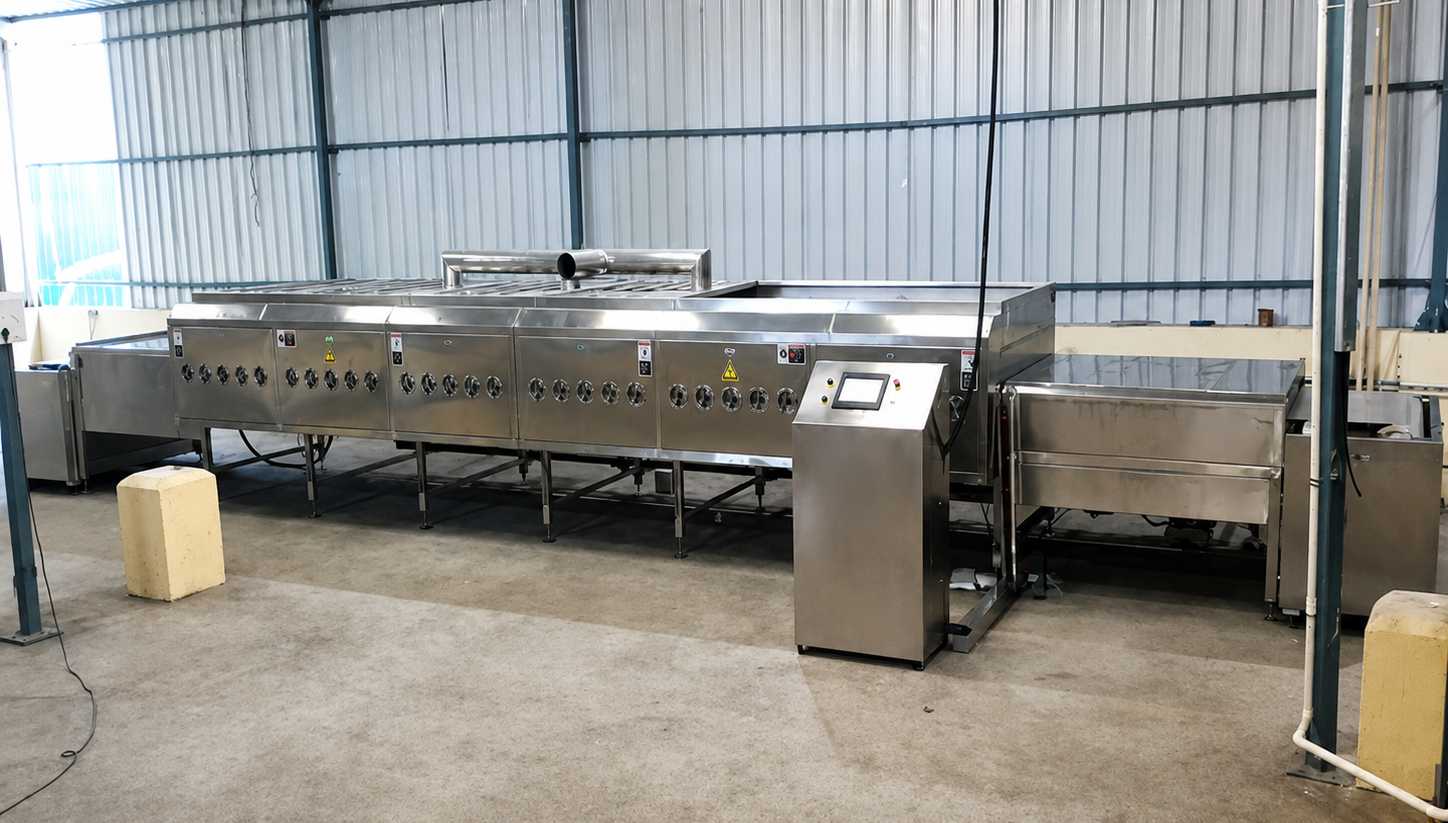
Microwave Dryer for Chemical Powder
Click to view high-res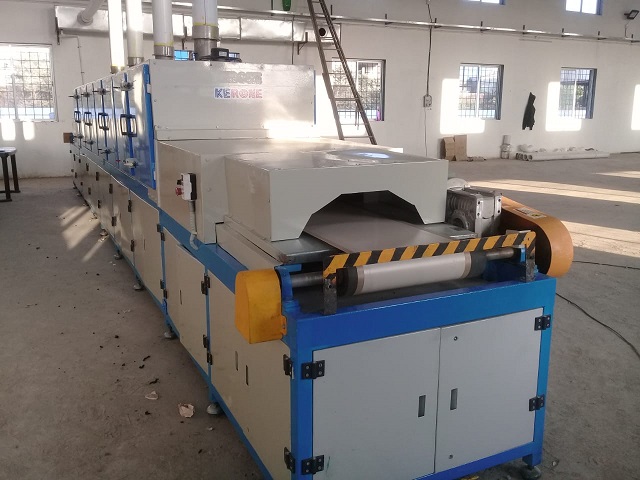
Microwave Dryer for Chemical Powder
Click to view high-res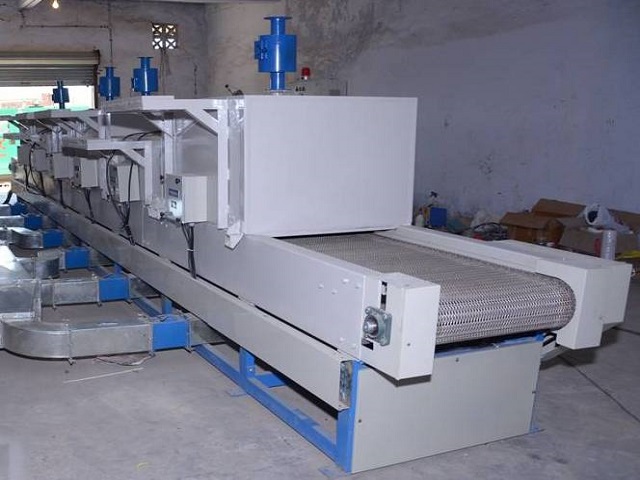
Microwave Dryer for Chemical Powder
Click to view high-res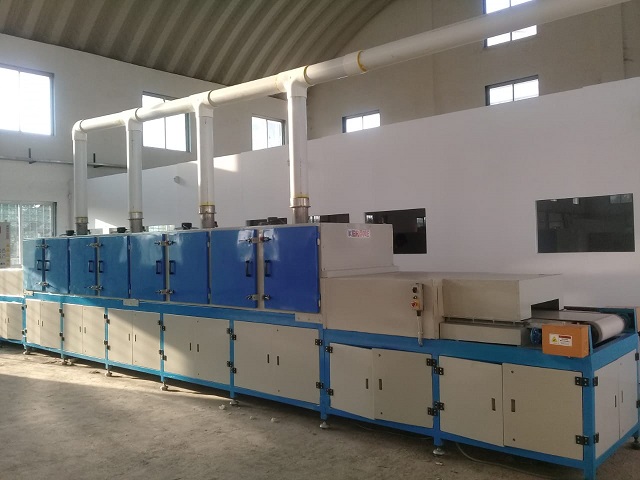
Microwave Dryer for Chemical Powder
Click to view high-res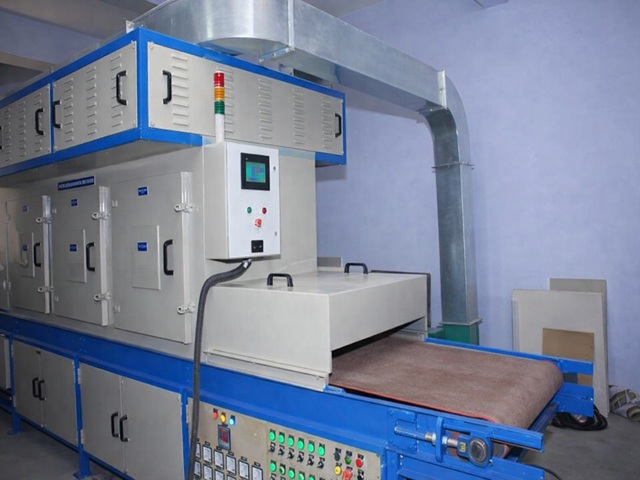
Microwave Dryer for Chemical Powder
Click to view high-res
Microwave Dryer for Chemical Powder
Click to view high-res50+ Years of Thermal Engineering Leadership.
Since 1976, Kerone Engineering Solutions has delivered over 5,000 custom-engineered thermal and process installations across 50+ countries. In technical collaboration with premier global institutions like CSIR-CEERI and University of Nottingham research partnerships, we design and manufacture high-efficiency machinery that minimizes production downtime and cuts operating expenses.
Unlike standard off-the-shelf equipment suppliers, Kerone operates a complete pilot-scale testing facility at our KRDC Ambernath center. We validate your exact raw material properties — determining moisture sorption isotherms, specific heat capacity, and dielectric behavior — before finalizing equipment sizing, ensuring zero risk during industrial scale-up.
Engineering precision, built into every system.
High Thermal and Processing
High thermal and processing efficiency
Low Maintenance and Easy
Low maintenance and easy operation
Suitable
Suitable for heat-sensitive materials
Fully Adjustable and
Fully adjustable and customizable process parameters
Available in Batch and
Available in batch and continuous configurations
Uniform Processing and
Uniform processing and consistent product quality
Powered by AI, Machine Learning & Smart IoT Integration
Modern industrial processing requires unprecedented thermal precision, energy efficiency, and operational agility. Kerone equips each system with high-speed industrial edge computing controllers, multi-spectral non-contact infrared pyrometry, and proprietary closed-loop machine learning algorithms that continuously analyze process parameters in real time.
The intelligent automation stack monitors dynamic changes in incoming material load, bed thickness, moisture content, and environmental factors. In response, our algorithms dynamically adjust heater power arrays, generator frequency, conveyor drive velocities, and exhaust dampers within milliseconds — entirely eliminating product burn, under-processing, or thermal hotspotting.
Seamlessly integrated with factory-wide SCADA and enterprise ERP architectures via native MQTT, OPC-UA, and Modbus TCP protocols, our systems deliver complete digital recipe control, remote diagnostics, predictive maintenance alerting, and tamper-evident batch logs compliant with global FDA 21 CFR Part 11 and cGMP standards.
Adaptive Heat Modulation
Neural algorithms detect material thermal variations in real time (<50ms response) and tune generator frequency and power arrays automatically.
IoT Cloud Telemetry
Continuous bidirectional telemetry stream via MQTT/OPC-UA protocols directly to centralized plant SCADA, MES, or mobile engineer dashboards.
Predictive Maintenance
Monitors magnetron cathode current, vibration frequency signatures, and differential filter pressure to schedule AMC maintenance before failures occur.
Quality & Batch Traceability
Automated digital recipe execution, multi-stage temperature ramp/soak curves, and cryptographically signed electronic batch logs compliant with 21 CFR Part 11.
Engineered for High-Value Industrial Sectors
Tailored thermal and process configurations across continuous manufacturing lines.
Food industry processing systems
Food industry processing systems
Chemical and polymer processing
Chemical and polymer processing
Pharmaceutical ingredients and inte...
Pharmaceutical ingredients and intermediates
Ready‑to‑eat (RTE) food production
Ready‑to‑eat (RTE) food production
Specialized heating, drying, or mat...
Specialized heating, drying, or material transformation processes
Industrial material modification an...
Industrial material modification and thermal treatment
Configured to Your Process Window
Technical parameter envelopes across industrial manufacturing and engineering architectures.
Frequently Asked Questions
Engineering answers regarding equipment sizing, integration, and process performance.
It is used for efficient processing, heating, drying or material transformation.
High efficiency, process reliability and complete customization.
Yes, Kerone offers fully customized engineering solutions.
Food, chemical, pharma, biomass, rubber, textile and more.
Kerone ensures high product quality through strict engineering standards, advanced testing procedures, and precision-controlled manufacturing systems.
The microwave dryer works by generating high-frequency electromagnetic waves that penetrate the chemical powder and excite water molecules inside the material. This internal heating process evaporates moisture evenly throughout the powder, reducing drying time and preventing surface overheating. The system typically includes a microwave generator, drying chamber, conveyor or tray system, temperature controls, and safety shielding for industrial operation.
Microwave dryers offer several benefits, including rapid drying time, uniform moisture removal, improved product quality, and lower energy consumption compared to traditional drying methods. They help maintain chemical properties, reduce agglomeration, and minimize contamination risks. Additionally, microwave drying systems can be customized for continuous or batch processing applications.
Before purchasing a microwave dryer, consider factors such as drying capacity, moisture content, particle size, power consumption, automation level, safety features, and compliance with industry standards. It is also important to evaluate installation space, maintenance requirements, and after-sales support from the manufacturer to ensure long-term operational efficiency.
These three configurations describe where microwave energy is introduced relative to a conventional convection drying stage. Preheating applies microwave energy first to drive internal moisture to the surface before conventional hot air removes it, useful when the product enters wet and dense. Booster drying introduces microwave energy partway through the cycle, typically once conventional drying slows down around two-thirds completion, to accelerate the removal of stubborn internal moisture. Finish drying applies microwave energy at the very end of the cycle when conventional efficiency has dropped off, and it doubles as a sanitization step since the final moisture pockets reach disinfection-level temperatures. Most chemical powder applications use finish drying because it captures the biggest efficiency gain at the stage where conventional dryers struggle most.
The suitability of a chemical powder for microwave drying depends on its dielectric properties, meaning how readily the material absorbs microwave energy through its moisture content. Powders with measurable water or polar solvent content respond well, since the energy couples directly into these molecules. Very low-moisture or non-polar powders may show minimal heating response and are better suited to other drying technologies. Particle size and bulk density also matter, since very fine powders can pack tightly and restrict vapor escape, while overly coarse material may dry unevenly. A reliable way to confirm suitability before committing to a full-scale purchase is a small batch trial on your actual product, since dielectric behavior varies even within similar chemical families.
Because microwave energy heats the product directly rather than relying on circulated hot air, there is less airflow movement across the powder bed, which reduces the risk of cross-contamination from recirculated air carrying particulates between batches. The enclosed chamber design also limits dust generation compared to fluid bed or rotary dryers that rely on mechanical agitation or high air velocity. Additionally, since drying times are shorter, the powder spends less time in a wet, agglomeration-prone state, which reduces clumping and the associated risk of trapped moisture pockets that can harbor microbial growth in sensitive formulations. These factors make microwave drying a preferred choice for chemical powders destined for pharmaceutical or food-grade applications where particulate control matters.
Standard configurations include a user-friendly control panel with pre-programmable timers that prevent overheating, automated power cutoff on fault conditions, and microwave leakage shielding built to international safety standards. Temperature sensors track the product throughout the drying chamber, allowing the system to hold or adjust power based on real-time readings rather than relying solely on fixed time settings. For continuous configurations, conveyor speed and microwave power can be synchronized to maintain consistent residence time as throughput changes. Buyers running multiple chemical formulations benefit from recipe-based controls, where drying parameters for each product are stored and recalled rather than manually re-entered for every batch changeover.
Batch microwave dryers suit lower-volume or multi-product operations where formulations change frequently, since the chamber can be cleaned and reconfigured between runs without disrupting a continuous line. Continuous systems are better suited to high-volume, single-product manufacturing where consistent throughput justifies a dedicated line, since they eliminate the load and unload downtime inherent to batch cycles. The economic trade-off centers on utilization: a continuous system sitting idle between product changeovers wastes capital, while a batch system run at high volume incurs more labor cost per unit of output due to repeated loading cycles. Most chemical powder producers evaluating this decision should map their actual production schedule against both models before committing to one configuration.
Electricity consumption is the primary ongoing cost driver, and this is determined by the moisture load to be removed, the dielectric loss factor of the specific chemical, and how efficiently the cavity design couples energy into the product rather than losing it as stray radiation. Maintenance costs are comparatively low since microwave generators have fewer moving parts than combustion-based heating systems, but magnetron or generator life should be factored into total cost of ownership over a multi-year horizon. Floor space savings compared to long convection tunnel dryers also translate into lower facility overhead per unit of installed drying capacity. Buyers should request energy consumption figures per kilogram of moisture removed when comparing supplier quotes, since this is a more meaningful cost metric than rated power alone.
Before finalizing a purchase, confirm the dryer has been trial-tested on your specific chemical formulation rather than a generic reference material, since dielectric response varies widely between chemical compounds. Verify the moisture content range the system is rated for, since some chemical powders arrive from upstream processes with highly variable starting moisture that can affect cycle consistency. Check automation level against your staffing model, confirm compliance documentation for microwave leakage and electrical safety standards relevant to your region, and clarify installation footprint and utility requirements such as power supply capacity and ventilation. Finally, ask about after-sales support response time, since downtime on a drying step can halt an entire production schedule.
Let’s Engineer the Right Process.
From application trials to full-scale production systems, our engineering team works with you to develop the right thermal processing solution for your material, throughput, and production requirements.